

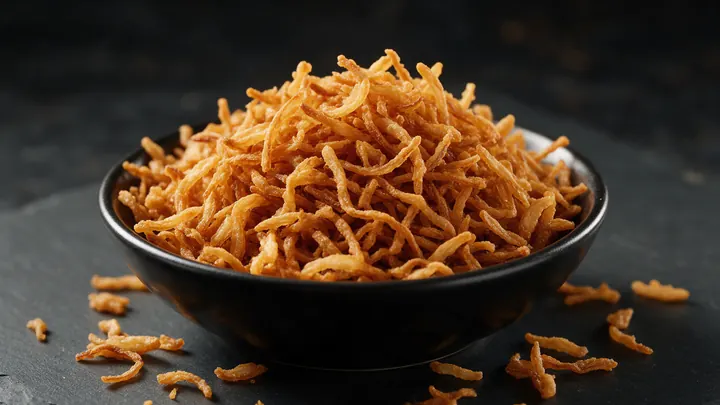

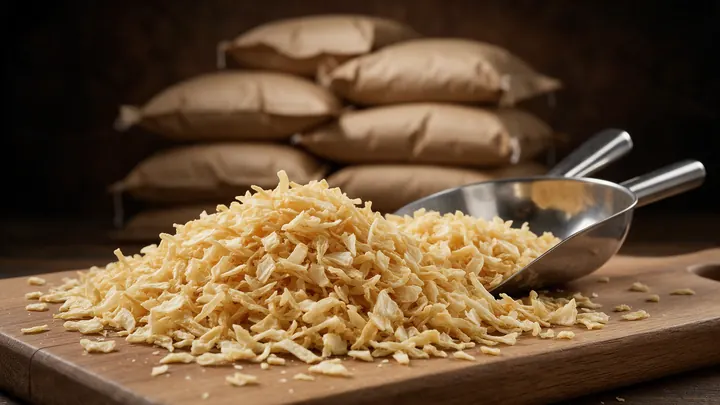






















Dehydrated onion nutrition is an important consideration for food manufacturers and ingredient buyers who want to understand how dried onions compare with fresh onions. Removing water changes the weight and concentration of nutrients, so the nutritional profile can look quite different when measured per 100 grams.
For businesses sourcing dehydrated onion ingredients, understanding these differences can help with product formulation and ingredient selection. Buyers can also explore product specifications from dehydrated onion suppliers in India when evaluating bulk requirements.
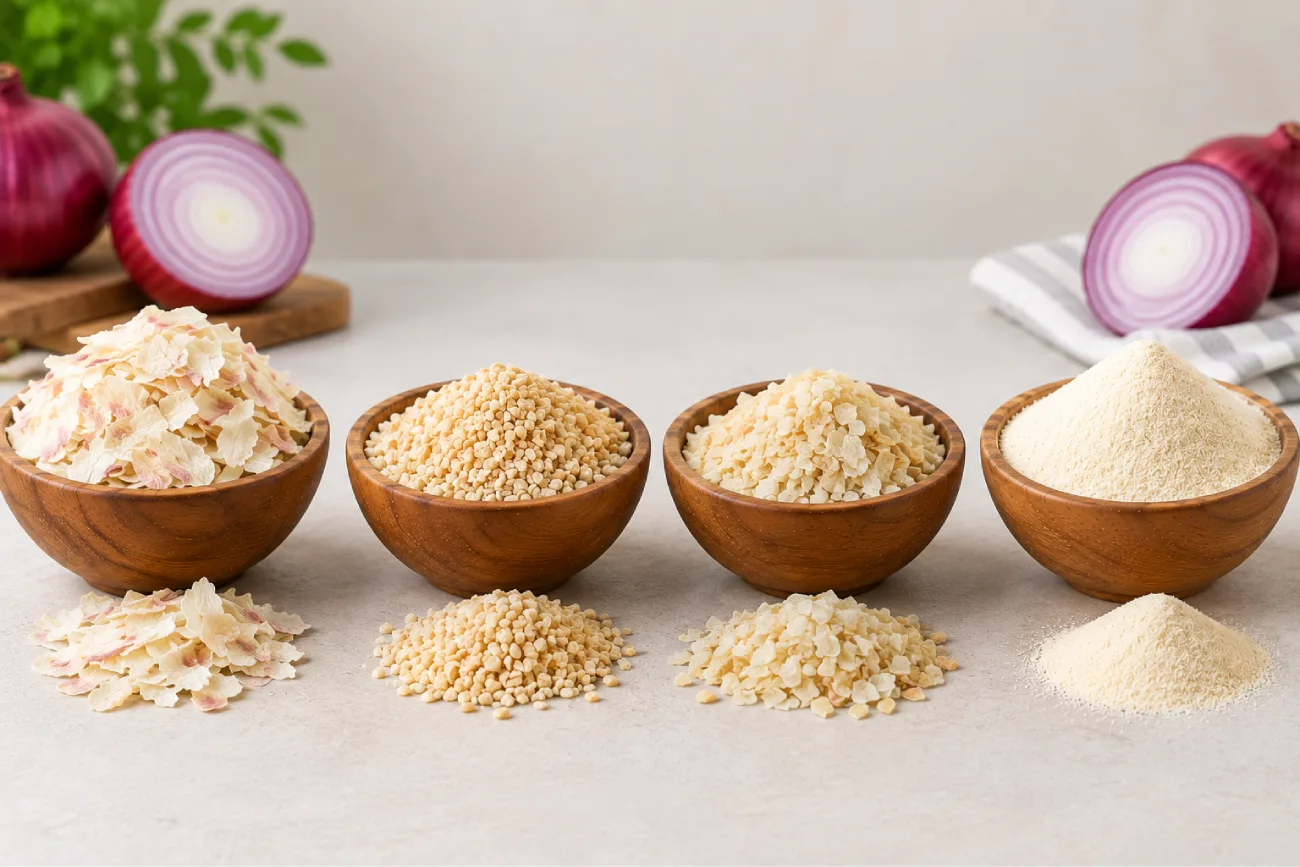
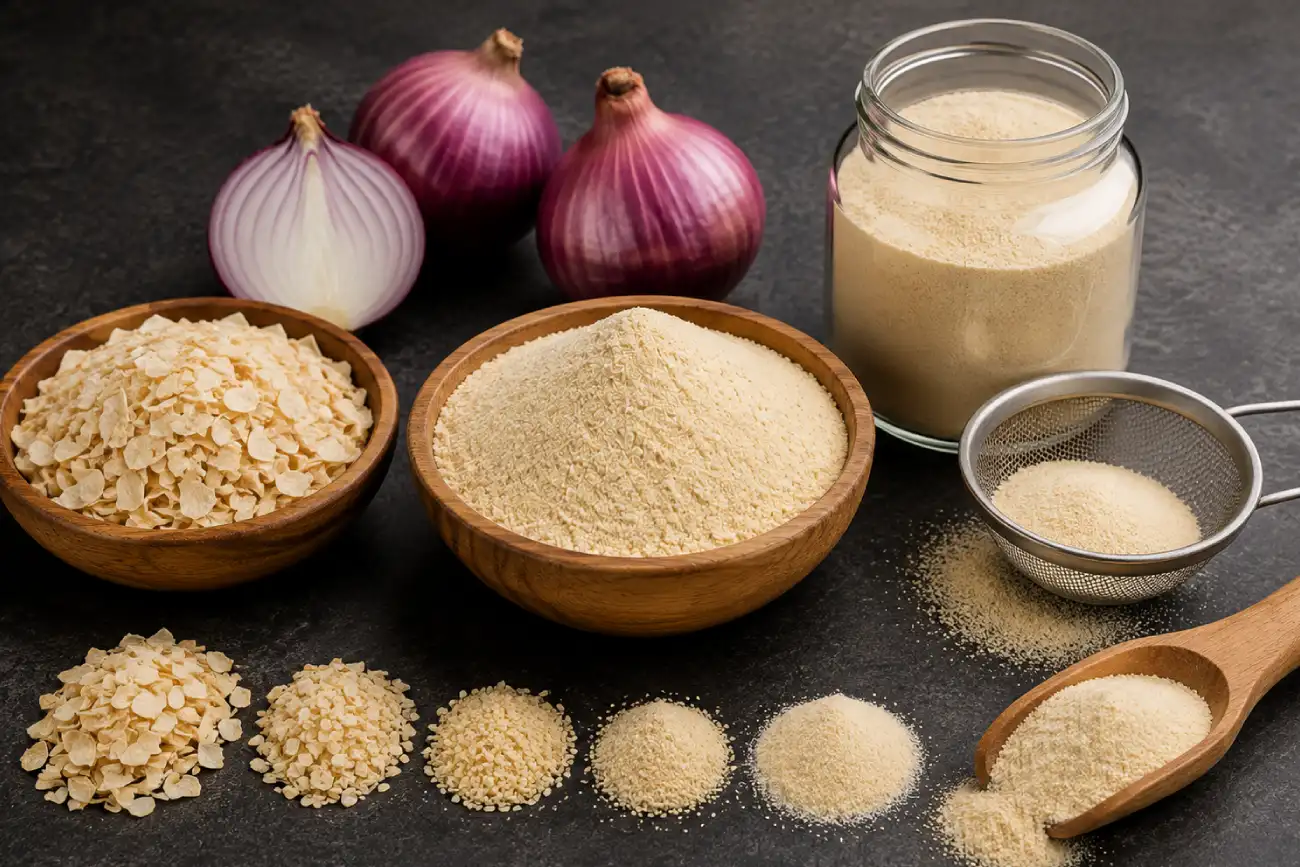
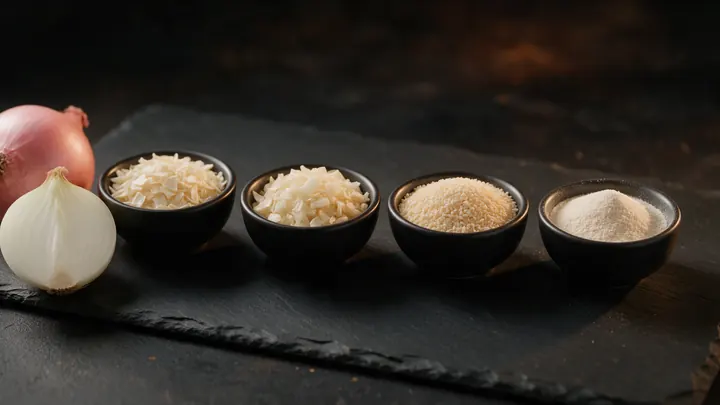
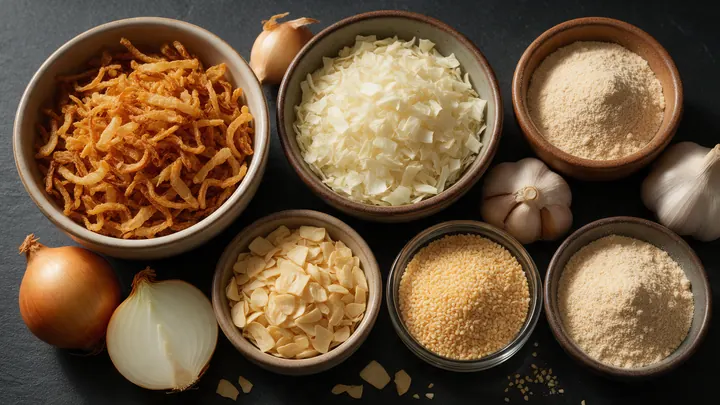
Dehydrated onions are available as flakes, minced pieces, granules and powder. Each form can serve different applications while providing the characteristic flavour and nutritional components of onion.
What Is Dehydrated Onion?
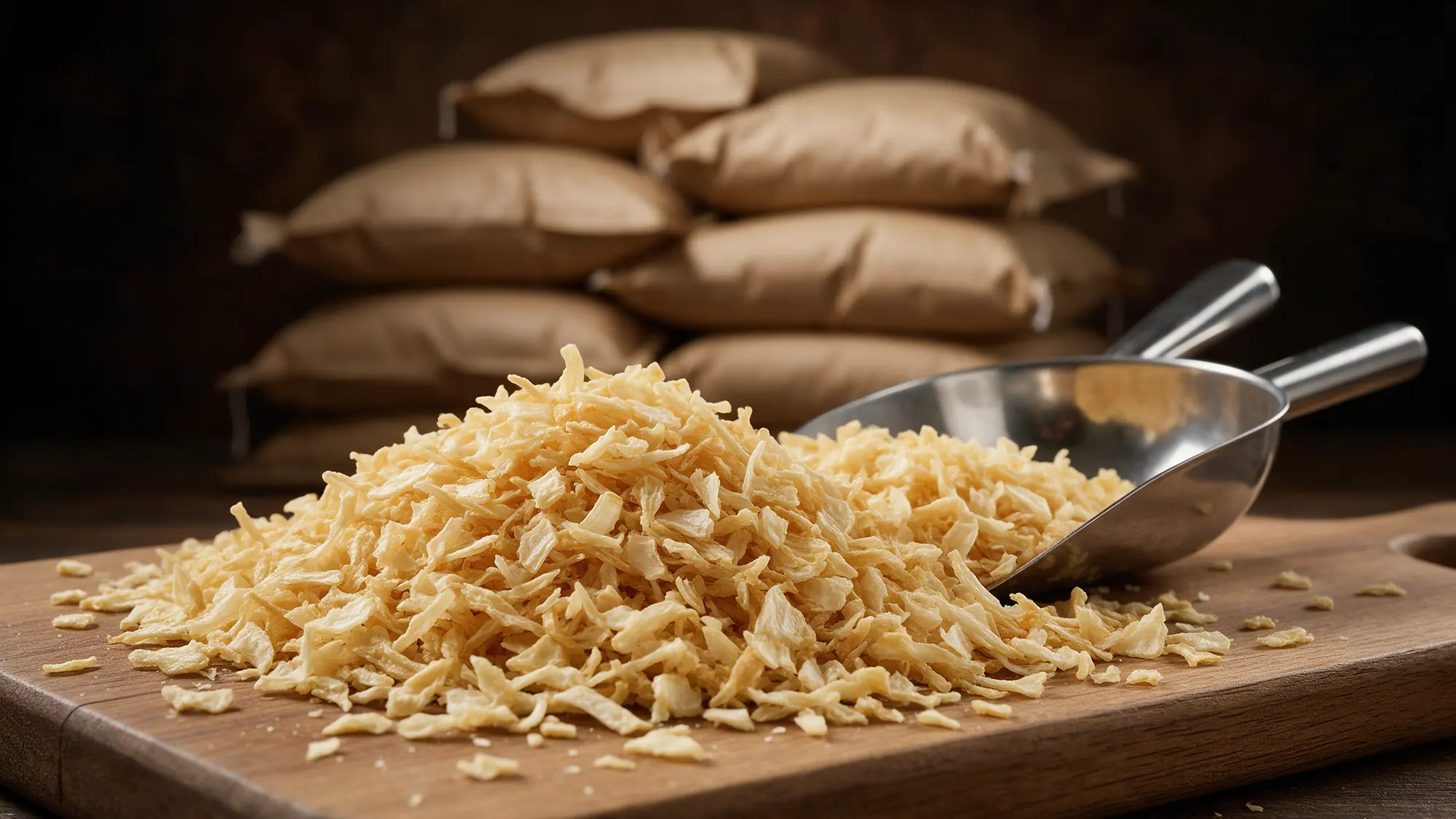
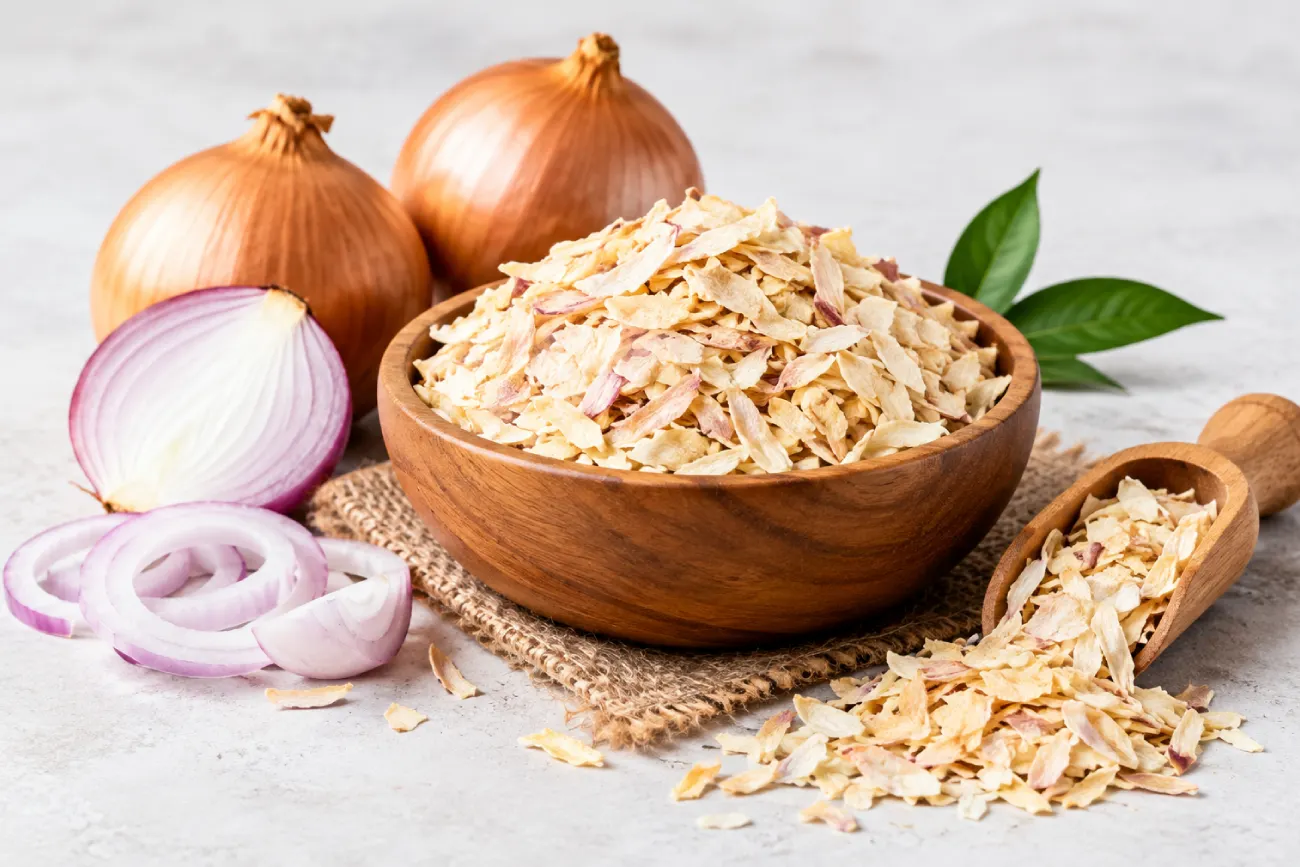
Dehydrated onion is fresh onion that has undergone controlled drying to remove much of its moisture.
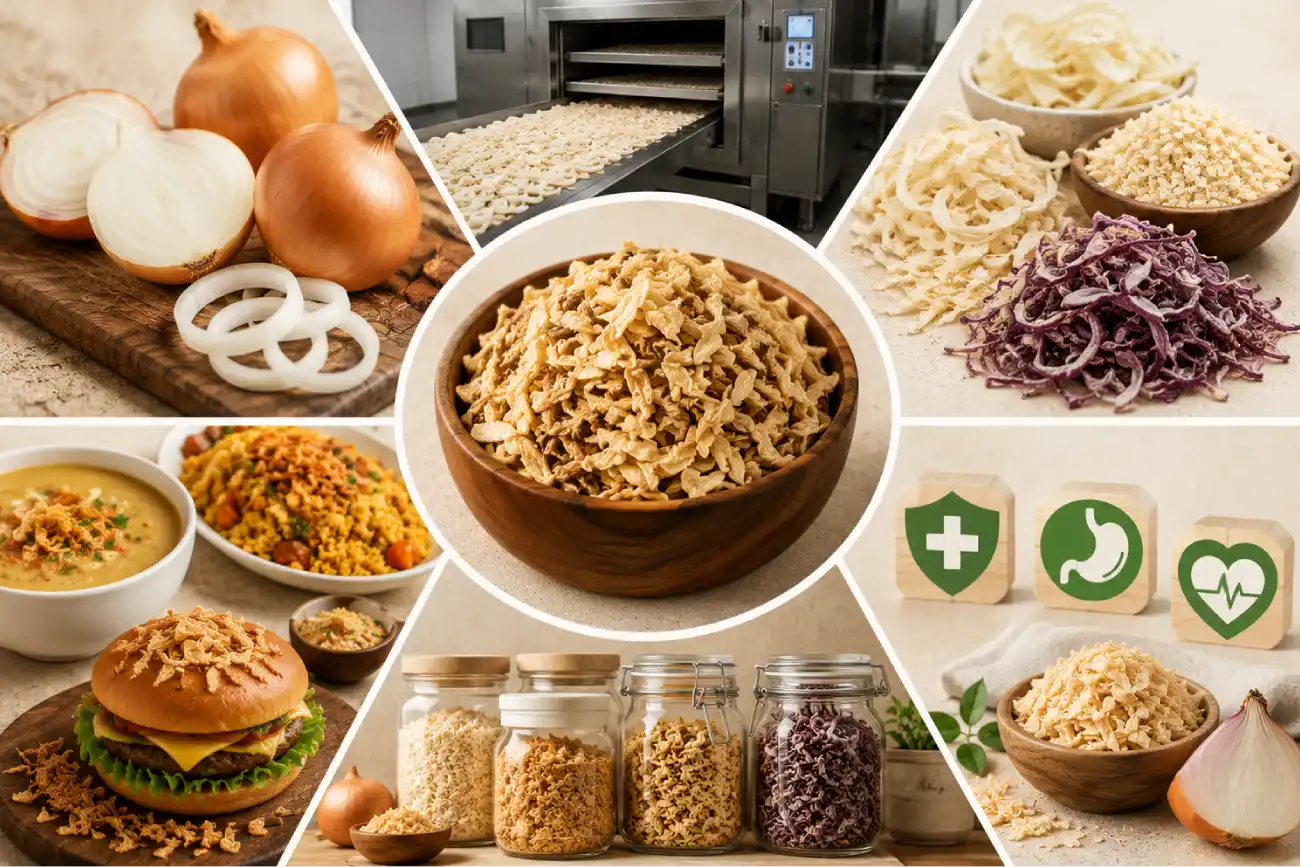
The process generally involves:
- Selecting suitable onions
- Cleaning and peeling
- Slicing or cutting
- Controlled dehydration
- Sorting and quality inspection
- Processing into the required particle size
- Food-grade packaging
The purpose is not simply to make onions lighter. Controlled dehydration helps produce a convenient ingredient with improved storage characteristics while retaining many of the components naturally present in onions.
The final nutritional values depend on the raw material, processing conditions, moisture level and product specification.
Dehydrated Onion Nutrition: What Nutrients Does It Provide?
Onions naturally contain carbohydrates, dietary fiber, small amounts of protein, vitamins, minerals and other plant compounds.
The USDA’s food composition resources provide nutrient information for different forms of onion and emphasise that food composition databases can include values for calories, fiber, vitamins, minerals and other components.
Important nutrients associated with dehydrated onion include:
- Carbohydrates
- Dietary fiber
- Potassium
- Calcium
- Iron
- Magnesium
- Phosphorus
- Vitamin C
- Folate
- Vitamin B6
The amount present in a particular commercial product should be confirmed through its product specification or laboratory analysis.
Fresh Onion vs Dehydrated Onion: Why Do Calories Look Different?
The biggest nutritional difference comes from water.
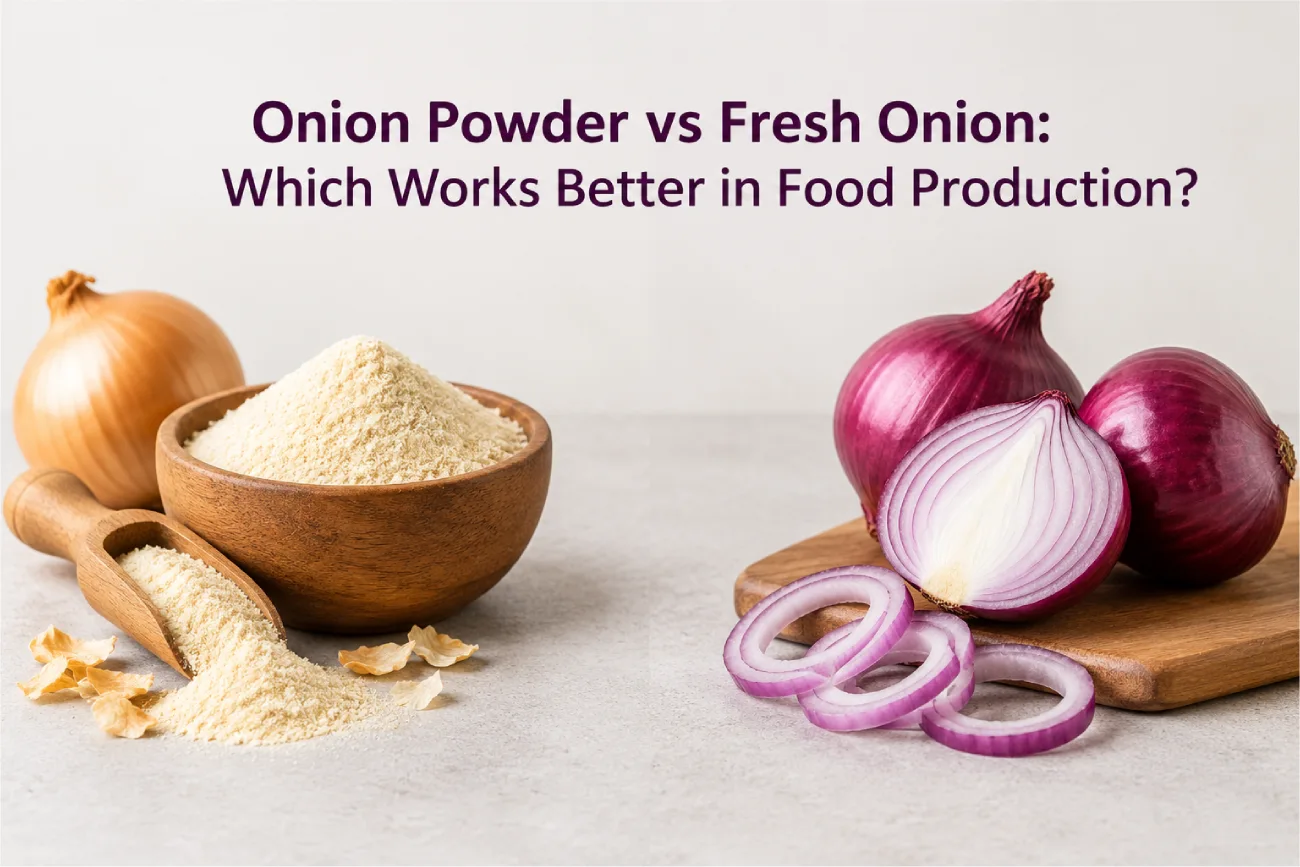
Fresh onions contain a high percentage of water. When that water is removed, the remaining nutrients become concentrated by weight.
For example, USDA data for raw sweet onion lists about 32 calories per 100 grams.
USDA reference data also lists dehydrated onion flakes at approximately 17 calories per 5-gram tablespoon, equivalent to roughly 340 calories per 100 grams.
This does not mean dehydration creates calories.
Instead, much of the water has been removed, so a smaller weight of dehydrated onion contains more concentrated solids than the same weight of fresh onion.
Simple comparison
| Factor | Fresh Onion | Dehydrated Onion |
| Water content | High | Much lower |
| Nutrients per 100 g | Less concentrated | More concentrated |
| Calories per 100 g | Lower | Higher |
| Storage weight | Higher | Lower |
| Storage volume | Higher | Lower |
| Preparation | Requires fresh handling | Ready-to-use ingredient |
| Typical commercial use | Fresh cooking | Food manufacturing and processed foods |
Therefore, comparing equal weights can be misleading. A more meaningful comparison considers the actual serving or recipe quantity used.
Vitamins in Dehydrated Onion
Onions provide several vitamins, although they are not normally considered a major source of every vitamin.
Vitamin C
Fresh onions contain vitamin C. Some vitamin C can be affected by processing and storage, so the amount remaining in a dehydrated product depends on the dehydration method and conditions.
USDA nutrient resources include vitamin C among the nutrients tracked in onion and other food products.
For commercial products, manufacturers should rely on product-specific laboratory data when precise nutritional labeling is required.
Vitamin B6
Onions also contain vitamin B6, which contributes to normal metabolic functions.
Dehydrated products may contain this nutrient in concentrated amounts by weight because water has been removed. However, actual retention depends on processing conditions.
Folate
Folate is another B vitamin found in onions.
As with other nutrients, the amount in a finished dehydrated product can vary according to raw material and processing. Businesses developing packaged foods should use verified analytical values for their specific ingredient.
Minerals Found in Dehydrated Onion
Dehydrated onion can contribute several minerals to food formulations.
Potassium
Potassium is naturally present in onions and is one of the minerals commonly associated with the vegetable.
Because dehydration removes water rather than simply removing the mineral fraction, potassium can appear more concentrated when the product is compared on a 100-gram basis.
Calcium and Magnesium
Onions also provide smaller amounts of calcium and magnesium.
While dehydrated onion is not usually purchased primarily as a mineral supplement, these naturally occurring nutrients can contribute to the overall nutritional profile of a finished food.
Iron and Phosphorus
Iron and phosphorus are also present in onion.
The exact quantity depends on the onion variety, growing conditions, processing and final moisture content. This is why a reliable dehydrated onion supplier in India should be able to provide appropriate product specifications for commercial buyers.
Does Dehydration Remove All the Nutrients?
No. Dehydration does not automatically eliminate all nutrients.
However, different nutrients respond differently to heat, oxygen, light and processing time.
Some nutrients can be relatively stable, while others, particularly certain heat-sensitive vitamins, may experience losses during processing.
The final nutritional profile therefore depends on:
- Dehydration temperature
- Processing time
- Moisture reduction
- Raw onion quality
- Storage conditions
- Packaging
- Exposure to oxygen and light
This is one reason controlled processing and proper packaging matter for commercial dehydrated ingredients.
Does Onion Powder Have the Same Nutrition as Onion Flakes?
Onion powder and onion flakes originate from dehydrated onions, but their nutritional values can differ slightly depending on the raw material and processing specifications.
The major difference is usually physical form rather than the basic nutritional identity of the onion.
Onion Flakes
Best suited for applications where visible onion pieces are desirable.
Onion Granules
Useful when manufacturers need a medium particle size with controlled distribution.
Onion Powder
Useful for seasoning blends, sauces, spice mixes and products where uniform onion flavor is required.
For B2B purchasing, particle size, moisture, purity and product specifications should be evaluated alongside nutritional information.
Why Does Dehydrated Onion Nutrition Matter for Food Manufacturers?
For food manufacturers, nutrition is only one part of ingredient selection.
A dehydrated onion ingredient can also help with:
- Consistent supply
- Easier inventory management
- Reduced preparation
- Controlled particle size
- Convenient transportation
- Longer storage potential when properly packed
- Consistent onion flavor
For snack and namkeen manufacturers, powder or granules can be incorporated into seasoning systems.
Ready-to-eat food brands may use flakes in products where visible onion pieces are desirable.
Spice and masala manufacturers may prefer powder because it blends easily with other powdered ingredients.
What Should Bulk Buyers Check?
When purchasing dehydrated onions commercially, nutrition should be considered together with product quality.
A buyer should check the following:
- Moisture: Helps assess storage stability and product consistency.
- Particle size: Important for powder, flakes and granules.
- Colour: Should meet the agreed product specification.
- Flavour and aroma: Should be suitable for the intended formulation.
- Purity: Confirm the required food-grade specifications.
- Packaging: Should protect the product from moisture and contamination.
- Shelf life: Confirm the supplier’s product-specific recommendation.
- Testing: Request samples before placing large recurring orders.
- Documentation: Check applicable food safety and quality documentation.
A professional dehydrated onion manufacturer in India should be able to communicate product specifications clearly and maintain reasonable batch-to-batch consistency.
Final Takeaway
Dehydrated onion nutrition is best understood by considering both nutrient concentration and serving size.
Fresh onions contain much more water, while dehydrated onions have much less moisture. As a result, nutrients and calories can appear considerably more concentrated per 100 grams of dehydrated product.
Dehydrated onions can provide carbohydrates, fiber, potassium and other naturally occurring vitamins and minerals. However, exact nutritional values vary by product and processing method.
For food businesses, the right approach is to evaluate nutrition alongside moisture, particle size, quality, packaging, consistency and application performance.
Optimum Foods supplies dehydrated onion products for food manufacturers, spice and masala brands, HoReCa businesses, distributors and bulk buyers, with a focus on consistent processing and food-grade quality.
Frequently asked questions
Is dehydrated onion more nutritious than fresh onion?
Dehydrated onion is not necessarily more nutritious than fresh onion. Removing water concentrates nutrients and calories by weight, so values per 100 grams can appear higher. Some nutrients may also decrease during processing. The actual nutritional profile depends on the onion variety, dehydration process, moisture level and storage conditions.
How many calories are in dehydrated onion?
Calories vary by product and moisture content. USDA reference data lists dehydrated onion flakes at about 17 calories per 5-gram tablespoon, while raw sweet onion contains about 32 calories per 100 grams. These figures show why serving size matters when comparing fresh and dehydrated onion nutrition.
Does dehydrated onion contain vitamins and minerals?
Yes. Dehydrated onion can contain naturally occurring nutrients such as vitamin C, vitamin B6, folate, potassium, calcium, magnesium, phosphorus and iron. However, nutrient levels vary according to raw material and processing. For food labeling, manufacturers should use verified analytical data for their specific dehydrated onion ingredient.
Does dehydration reduce the vitamin content of onions?
Dehydration can affect certain vitamins, particularly nutrients that are sensitive to heat, oxygen, or processing time. The extent of nutrient loss depends on the processing conditions. Controlled dehydration and suitable packaging can help maintain product quality. Commercial buyers should request product-specific nutritional and technical specifications when required.
Is dehydrated onion suitable for food manufacturing?
Yes. Dehydrated onion is widely useful in commercial food applications because it is convenient, easy to store and available in different particle sizes. Powder, flakes, granules and minced forms can be selected according to the formulation. Manufacturers should test the ingredient in their specific production process before bulk purchasing.
What should I ask a Dehydrated Onion Supplier in India?
A Dehydrated Onion Supplier in India should be able to provide product specifications covering moisture, particle size, appearance, packaging, shelf life and applicable quality documentation. Buyers should also request samples and nutritional information when required. For regular supply, production capacity, consistency, MOQ, lead time and export documentation are also important.