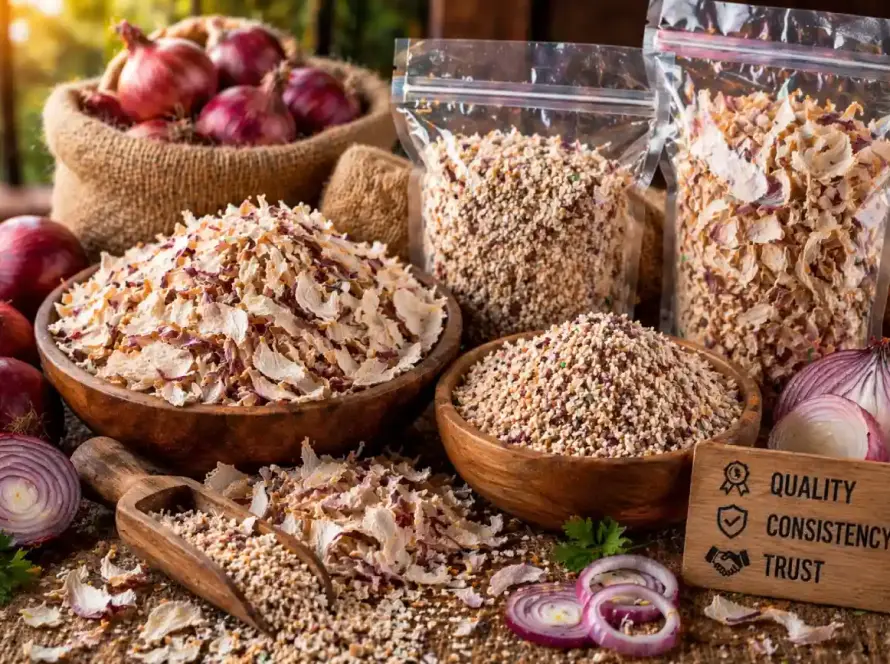
Selecting the right onion powder is about much more than price. Understanding onion powder specifications helps food manufacturers, spice brands, restaurants, exporters and distributors purchase a product that delivers consistent flavor, appearance, processing performance and shelf life. Whether you manufacture seasoning blends, ready-to-eat foods, snacks, or sauces, choosing the correct specification directly impacts the quality of your finished product.
If you are looking for reliable dehydrated onion suppliers in India, understanding technical specifications such as mesh size, moisture, purity, particle consistency and food safety standards will help you make an informed buying decision.
This guide explains the most important onion powder specifications every commercial buyer should understand before placing a bulk order.
Why Onion Powder Specifications Matter
Every food application requires different product characteristics. A seasoning manufacturer may require an ultra-fine powder for even blending, while a soup manufacturer may prefer a coarser grade for better texture.
Understanding specifications helps buyers:
- Maintain consistent product quality
- Improve manufacturing efficiency
- Reduce production waste
- Ensure uniform flavor
- Meet customer expectations
- Comply with food safety standards
For commercial food production, selecting the correct specification is just as important as choosing a trusted supplier.
What Is Dehydrated Onion Powder?
Dehydrated onion powder is produced by carefully drying fresh onions and grinding them into a fine powder under controlled processing conditions. The dehydration process preserves the natural flavor and aroma while significantly extending shelf life.
It is widely used in:
- Spice blends
- Ready-to-eat foods
- Instant soups
- Snack seasonings
- Sauces and gravies
- Frozen foods
- Bakery products
- Meat processing
Its long shelf life and ease of use make it an essential ingredient for commercial food manufacturers.
Understanding Mesh Size
What Is Mesh Size?
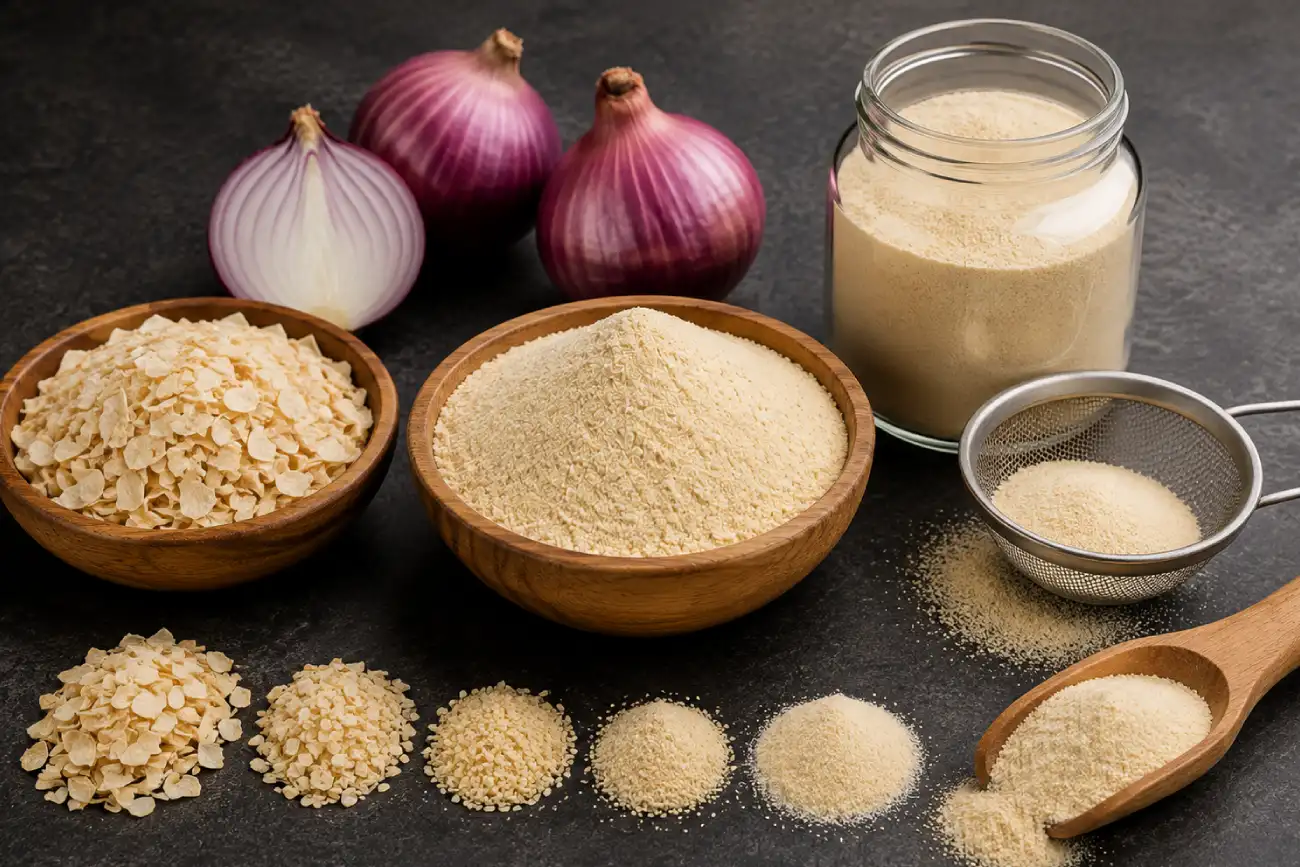
Mesh size refers to the fineness of onion powder. It indicates how small the powder particles are after grinding and sieving.
A higher mesh number means a finer powder.
For example:
- 40 Mesh – Coarse powder
- 60 Mesh – Medium powder
- 80 Mesh – Fine powder
- 100+ Mesh – Extra fine powder
The correct mesh size depends on your product application.
Choosing the Right Mesh Size
Different industries require different particle sizes.
Fine Mesh Powder
Suitable for:
- Spice blends
- Dry seasoning
- Instant soup mixes
- Beverage premixes
Medium Mesh Powder
Preferred for:
- Curry powders
- Marinades
- Sauce mixes
- Processed foods
Coarse Powder
Often used where slight texture is preferred, including certain seasoning blends and specialty food products.
Reliable dehydrated onion manufacturers can supply customized mesh sizes based on production requirements.
Moisture Content
Moisture is one of the most important quality specifications.
Lower moisture helps:
- Extend shelf life
- Prevent microbial growth
- Reduce caking
- Maintain free-flowing powder
- Improve storage stability
Professional manufacturers carefully monitor moisture levels during processing and packaging to maintain consistent product quality.
Purity Standards
Purity refers to the percentage of actual dehydrated onion present in the product.
High-quality onion powder should contain:
- Pure dehydrated onion
- Uniform particle size
- Natural aroma
- Consistent color
- No unwanted foreign material
Commercial buyers should request product specifications and quality certificates before purchasing.
Color Standards
Color often indicates processing quality.
Premium onion powder typically has:
- Light cream color
- Off-white appearance
- Uniform consistency
Dark or uneven color may indicate excessive heat exposure during processing or poor-quality raw materials.
Aroma and Flavor
Fresh onion aroma is an important quality indicator.
High-quality powder should provide:
- Strong natural onion flavor
- Clean aroma
- No burnt smell
- No stale odor
- Consistent taste across production batches
Maintaining aroma is essential for seasoning manufacturers and ready-to-eat food producers.
Flowability
Good onion powder should remain free-flowing during storage.
Poor flowability can result from:
- Excess moisture
- Improper packaging
- Long-term humidity exposure
High-quality packaging significantly improves storage stability and processing efficiency.
Packaging Standards
Proper packaging protects onion powder against moisture, oxygen and contamination.
Commercial packaging options include:
- Multi-layer laminated bags
- HDPE-lined sacks
- Food-grade pouches
- Bulk export packaging
- Customized private-label packaging
Professional dehydrated onion suppliers in India offer packaging options suitable for domestic and export markets.
Food Safety Standards
Food safety is critical when sourcing dehydrated onion powder.
Reliable manufacturers follow internationally recognized systems such as:
- HACCP
- ISO 22000
- Good Manufacturing Practices (GMP)
- FSSAI regulations
These standards help ensure hygienic production, traceability and consistent product quality.
Quality Tests Buyers Should Request
Before placing a bulk order, ask suppliers for:
- Moisture analysis
- Mesh size specification
- Microbiological testing
- Purity reports
- Product specification sheet
- Certificate of Analysis (COA)
- Batch traceability
These documents provide confidence that the product meets commercial requirements.
Choosing the Right Supplier
Selecting an experienced supplier is just as important as selecting the correct specification.
Look for manufacturers that offer:
- Consistent product quality
- Modern processing facilities
- Food safety certifications
- Laboratory quality testing
- Export-ready packaging
- Reliable production capacity
- Transparent technical documentation
Experienced dehydrated onion suppliers in India can also customize mesh sizes and packaging to match your production needs.
Why India Is a Preferred Sourcing Destination
India is one of the world’s leading producers of dehydrated onion products due to its strong agricultural base and advanced food processing industry.
Working with established bulk-dehydrated onion exporters offers several advantages:
- Competitive pricing
- Reliable year-round supply
- Modern manufacturing facilities
- Export-quality packaging
- Flexible bulk order quantities
- Strong international logistics support
These strengths make India a trusted sourcing destination for food manufacturers around the world.
Industry Guidance
Commercial buyers should purchase onion powder from manufacturers that follow recognized food safety systems and maintain strict quality control.
For additional information on food safety and ingredient manufacturing, refer to the U.S. Food & Drug Administration (FDA).
The FDA provides guidance on preventive controls, food safety systems and quality management practices used throughout the food industry.
Conclusion
Understanding onion powder specifications allows food manufacturers to choose products that deliver consistent flavor, long shelf life, reliable processing performance and high product quality. Mesh size, moisture content, purity, packaging and food safety certifications are all essential factors when evaluating suppliers.
Whether you manufacture snacks, spice blends, sauces, or ready-to-eat foods, partnering with an experienced dehydrated onion supplier ensures dependable quality and efficient production.
At Optimum Foods, we manufacture premium dehydrated onion powder using carefully selected raw materials, advanced processing technology, rigorous quality control and export-grade packaging to serve food manufacturers, distributors, exporters and HoReCa businesses across India and international markets.
Frequently Asked Questions
- What is the ideal mesh size for onion powder?
The ideal mesh size depends on the application. Fine mesh (80–100 mesh) is commonly used in seasoning blends, spice mixes and instant foods, while medium or coarse mesh is preferred for soups, sauces and products that require more texture. Always choose the specification based on your manufacturing process.
- Why is moisture content important in onion powder specifications?
Moisture content directly affects the shelf life, flowability and quality of dehydrated onion powder. Lower moisture helps prevent microbial growth, reduces caking during storage and maintains the product’s natural flavor and aroma. Reliable manufacturers monitor moisture carefully to ensure consistent product performance.
- How can I verify the purity of dehydrated onion powder?
Request a Product Specification Sheet, Certificate of Analysis (COA) and laboratory test reports from the supplier. High-quality dehydrated onion powder should contain pure dehydrated onion with uniform particle size, consistent color, natural aroma and no foreign matter or unwanted additives.
- Why should I choose Dehydrated Onion suppliers in India?
Professional Dehydrated Onion suppliers in India offer advanced manufacturing facilities, modern dehydration technology, strict quality control, competitive pricing, export-grade packaging and reliable year-round supply. These advantages make India one of the world’s preferred sourcing destinations for commercial onion ingredients.
- What certifications should a Dehydrated Onion manufacturer have?
Choose manufacturers with internationally recognized certifications such as HACCP, ISO 22000, GMP and FSSAI compliance. These certifications demonstrate adherence to food safety, hygiene, traceability and quality management standards, giving buyers greater confidence in product consistency and reliability.
- Why work with a Bulk Dehydrated Onion Exporter?
A Bulk Dehydrated Onion Exporter provides consistent production capacity, customized packaging, export documentation, technical support, quality assurance and efficient international logistics. These services help food manufacturers, distributors and importers maintain an uninterrupted supply chain while meeting global quality requirements.