


























Onion & garlic conversion calculator
Fresh to powder, granules, minced, flakes and fried, both ways
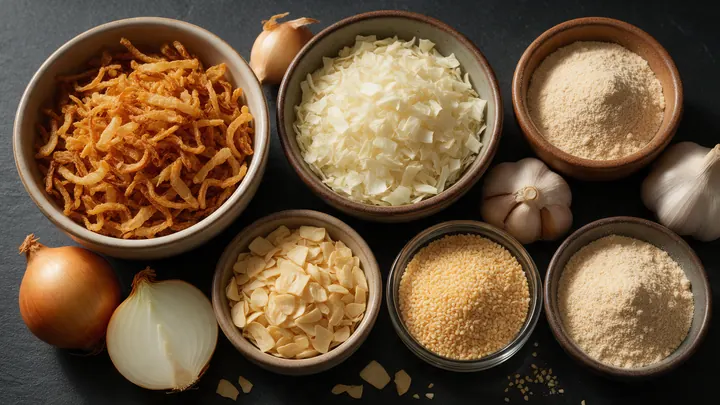
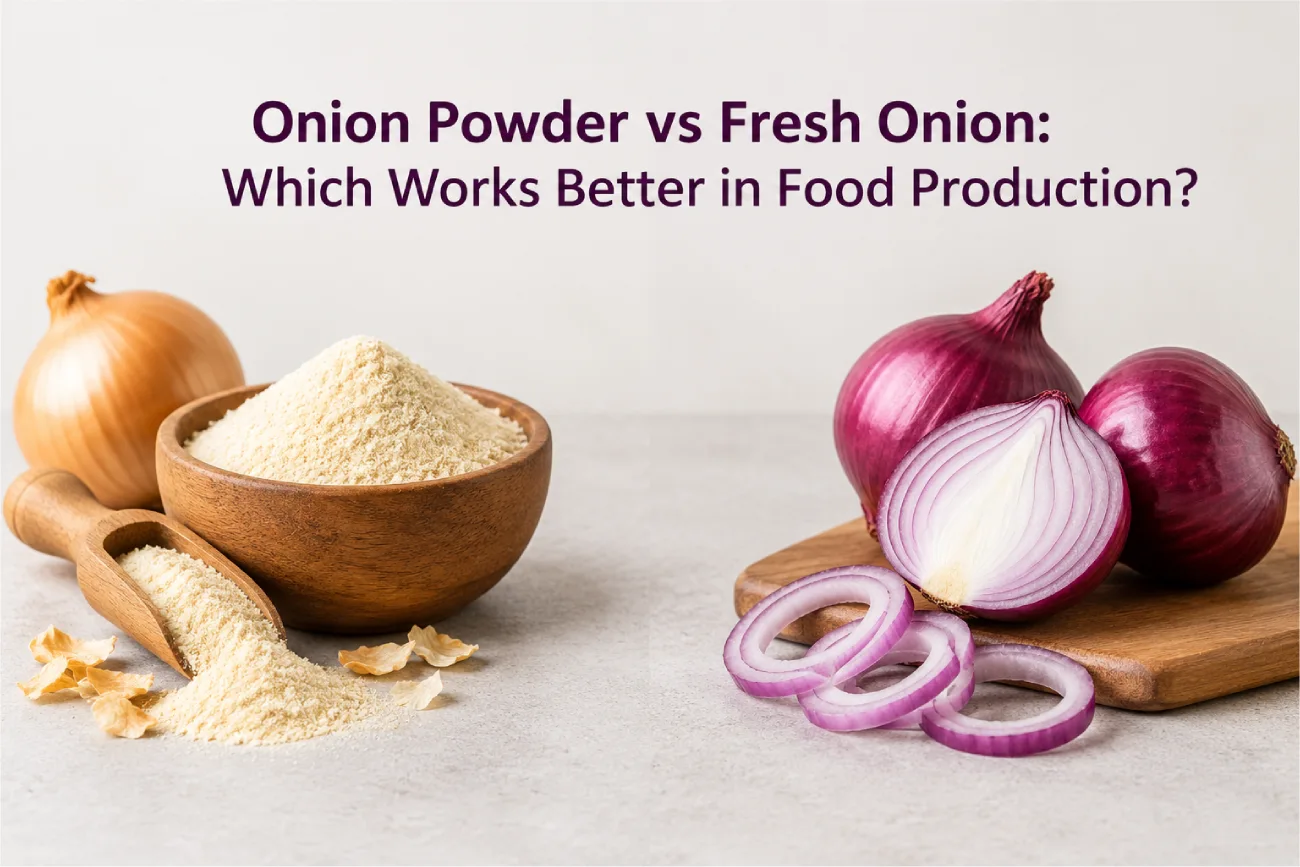
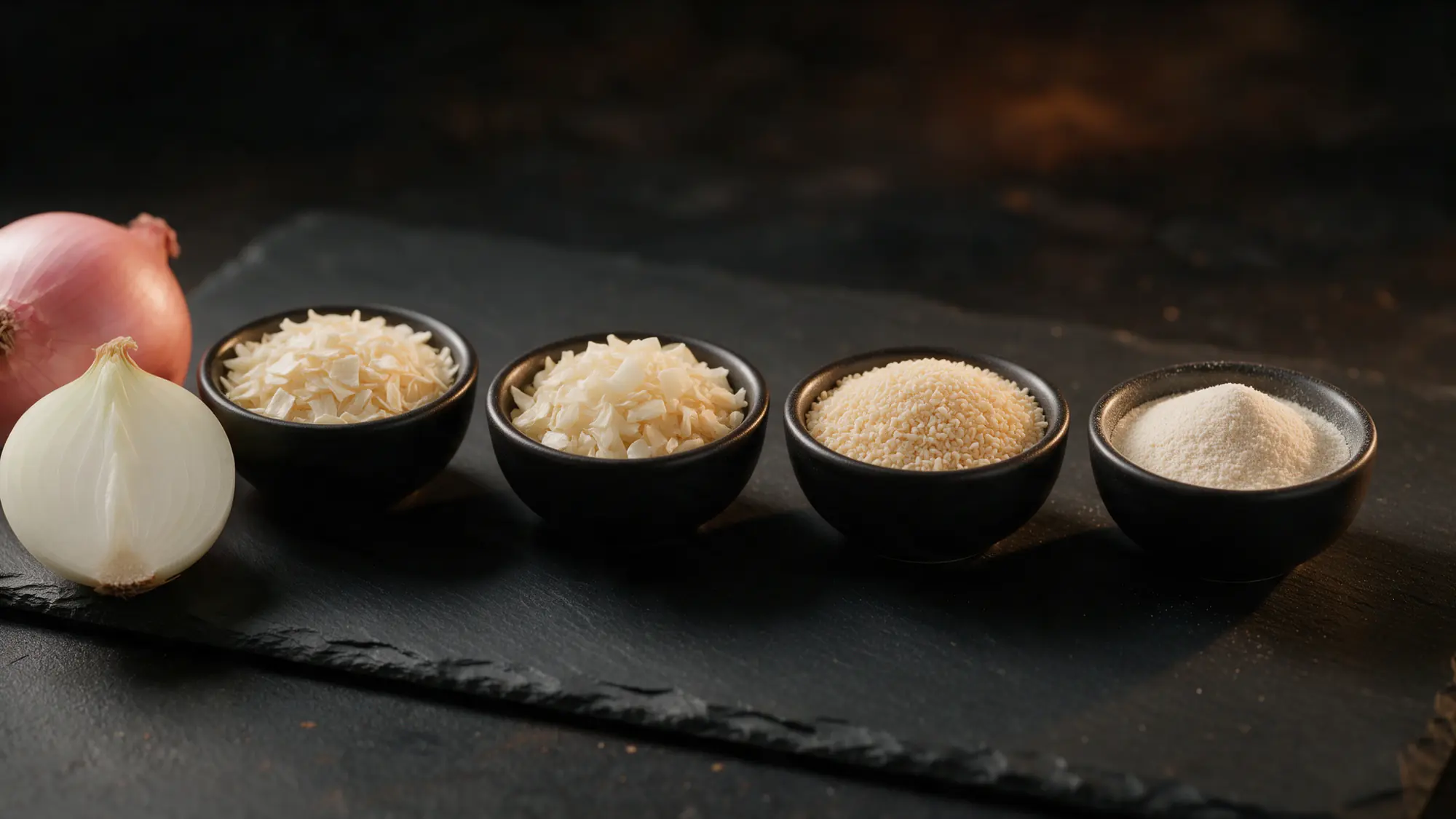
One medium onion equals 1 tbsp onion powder, 3 tbsp dried minced onion or 1/4 cup onion flakes. One garlic clove equals 1/8 tsp garlic powder, 1/4 tsp granules or 1/2 tsp dried minced garlic. Enter any quantity and get the equivalent in spoons, cups and grams, with a rehydration tip.
Fresh to dehydrated, both directions
One medium onion is about 110 g. 1 tsp = 5 ml, 1 tbsp = 15 ml, 1 cup = 240 ml.
Onion powder dissolves into liquids and dry blends. It does not need rehydrating; stir it into the sauce, batter or seasoning base and let it bloom for a minute.
Dried forms carry a more concentrated flavour than fresh. Start with a little less than the equivalent and adjust to taste.
The ratios behind the numbers
Dehydrated onion and garlic are the fresh vegetable with the water removed, so every conversion is a question of dry matter and particle size.
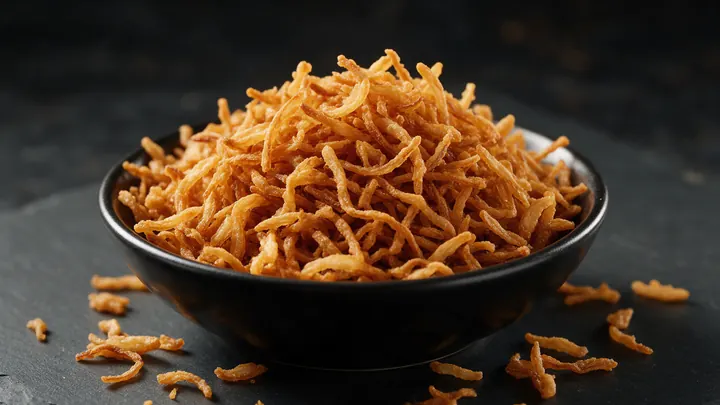
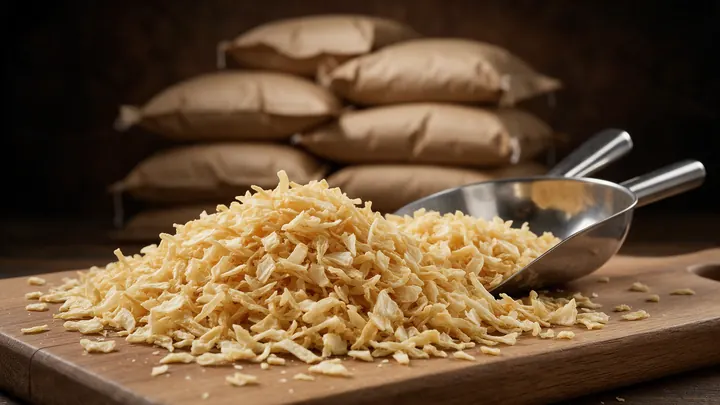
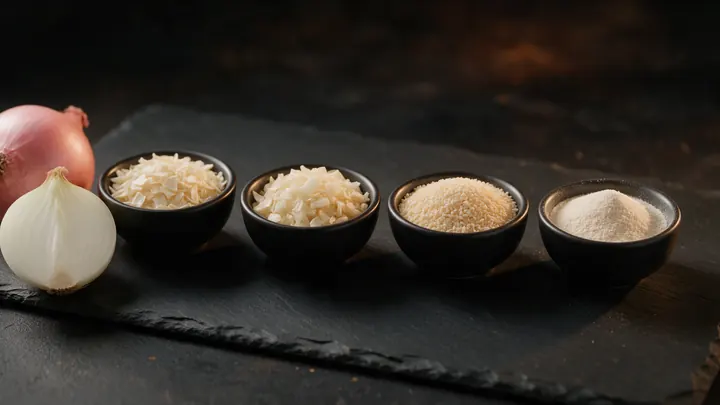
A medium onion weighs about 110 g and is roughly 88% water. Dry it and you are left with about 12 g of onion solids, which is why 3 tbsp of dried minced onion (12 g) or 1/4 cup of onion flakes (12 g) replace one onion. Powder is milled finer and packs more densely, so the kitchen convention is 1 tbsp (7 g) per onion: it releases flavour faster and a little goes further. Crispy fried onions are a different product again: the onion is sliced, fried in vegetable oil and caramelised, so about 1/3 cup (20 g) gives one onion's worth of flavour with a sweeter, roasted profile.
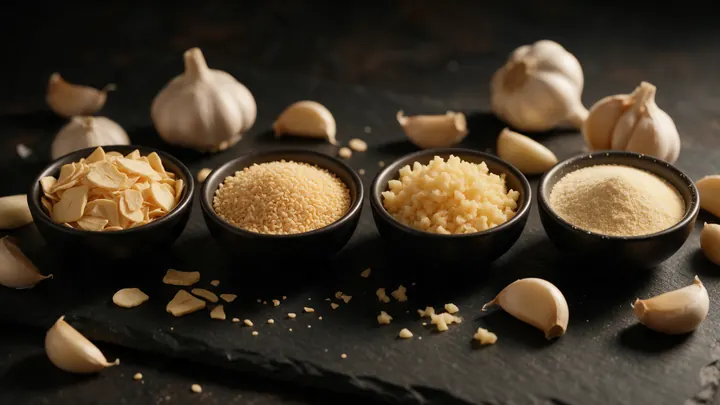
Garlic follows the same logic at a smaller scale. A clove weighs about 4 g and is about 60% water. The standard equivalents are 1/8 tsp garlic powder (0.4 g), 1/4 tsp garlic granules (0.8 g), 1/2 tsp dried minced garlic (1 g) or 1/2 tsp garlic flakes (0.7 g). Granules are the same dried garlic as powder in a coarser particle, so recipes call for twice the volume.
The calculator converts your quantity into grams of the form you have, divides by the per-onion or per-clove figure to get "fresh units", then multiplies by the per-unit weight of the form you need. Volumes use 1 tsp = 5 ml, 1 tbsp = 15 ml and 1 cup = 240 ml together with the bulk density of each form (for example 3 g per tbsp for onion flakes and 9.5 g per tbsp for garlic powder), so a result in spoons is a result you can measure.
Measure the fresh quantity
Count onions or cloves, or weigh them. A medium onion is about 110 g; a clove about 4 g.
Apply the ratio
Per onion: 1 tbsp powder, 3 tbsp minced, 1/4 cup flakes. Per clove: 1/8 tsp powder, 1/4 tsp granules, 1/2 tsp minced.
Rehydrate when you need pieces
1 part dried to 2 parts warm water for 10 to 15 minutes, or add directly to dishes that simmer 15 minutes or more.
Dried forms are concentrated, consistent and shelf-stable
Switching from fresh to dehydrated removes peeling, chopping and waste, and it fixes the flavour dose: a tablespoon of onion powder tastes the same in January and in July, which a fresh onion never does. It also removes about nine tenths of the weight and volume from your freight and storage, and extends shelf life from weeks to 12 to 18 months in cool, dry storage.
Because the flavour is concentrated, over-dosing is the most common mistake. Start with the calculated equivalent or slightly less, allow a minute for powder to bloom in liquid, and give flakes, minced and granules time to rehydrate so the texture reads as onion or garlic rather than as a dry fleck. Our dehydrated onion and dehydrated garlic pages list the particle sizes and specifications of each form, and the product finder will suggest the right one for your process.
Conversion questions, answered
How much onion powder equals one fresh onion?
One medium fresh onion (about 110 g) equals 1 tablespoon (7 g) of onion powder. The same onion equals 3 tablespoons (12 g) of dried minced onion, 1/4 cup (12 g) of onion flakes or about 1/3 cup (20 g) of crispy fried onions.
How much garlic powder equals one clove of garlic?
One medium garlic clove (about 4 g) equals 1/8 teaspoon (0.4 g) of garlic powder, 1/4 teaspoon (0.8 g) of garlic granules, 1/2 teaspoon (1 g) of dried minced garlic or 1/2 teaspoon (0.7 g) of garlic flakes.
How do I rehydrate dried onion or garlic?
Soak 1 part dried onion or garlic (flakes, minced or granules) in about 2 parts warm water for 10 to 15 minutes, then drain. In soups, sauces and dishes that simmer for 15 minutes or more you can add the dried form directly. Powder does not need rehydrating; stir it straight into the liquid or dry blend.
Why does the calculator show fewer grams of powder than flakes for the same onion?
Powder is milled from the same dried onion, but it packs more densely and releases flavour faster, so the kitchen convention uses about 7 g of powder against 12 g of flakes or minced per medium onion. If you want an exact dry-matter match, use 12 g; if you want the usual flavour match, keep 7 g.
Are dried onion and garlic stronger than fresh?
Per gram, yes. Dehydration removes about 88% of the water in onion and about 60% in garlic, so the flavour compounds are concentrated. Dried forms also have a rounder, slightly sweeter profile than raw fresh produce. Start with a little less than the equivalent and adjust to taste.
What weights and volumes does the calculator use?
1 teaspoon = 5 ml, 1 tablespoon = 15 ml and 1 cup = 240 ml. Bulk densities per tablespoon: onion powder 7 g, dried minced onion 4 g, onion flakes 3 g, crispy fried onions 3.75 g, garlic powder 9.5 g, garlic granules 10 g, dried minced garlic 6 g, garlic flakes 4.2 g. A medium onion is counted as 110 g and a garlic clove as 4 g.
Next, size the order
Bulk Order & Container Load Calculator
Turn a quantity in kg, MT or lb into bags or cartons, pallets and 20 ft or 40 ft container loads, with MOQ and shelf-life guidance, then request the quote.
Open the toolProduct Finder
Answer three questions about your application, texture and process and get the right onion, garlic or fried onion product and form.
Open the tool
Ready to move from numbers to samples?
Tell us the product, form, quantity and destination. Specifications, pricing and lead times come back within one working day.