
























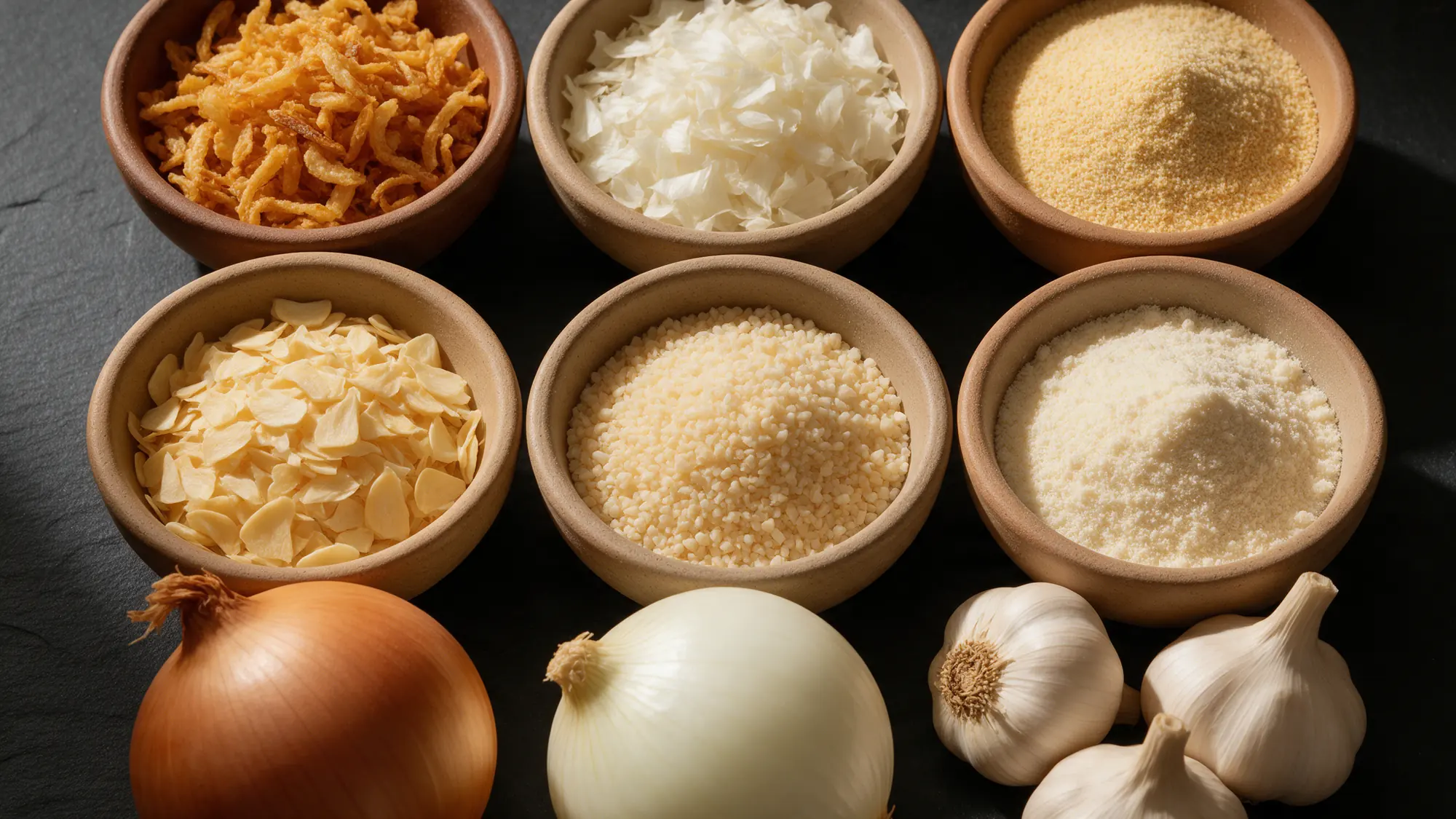
Which onion, garlic or fried onion product do I need?
Three questions, one recommendation
Tell us what you are making, the texture you need and how it is processed. The finder recommends the right product and form, from onion or garlic powder, granules, minced and flakes to crispy, fresh or dehydrated fried onions, explains why, and links to the product page and the bulk calculator.
Three questions, one recommendation
Your recommendation appears here with the product, the form, why it fits and where to go next.
A small decision table, built from real orders
The finder encodes the way our technical sales team matches an application to a form. Three answers narrow eight products and forms down to one.
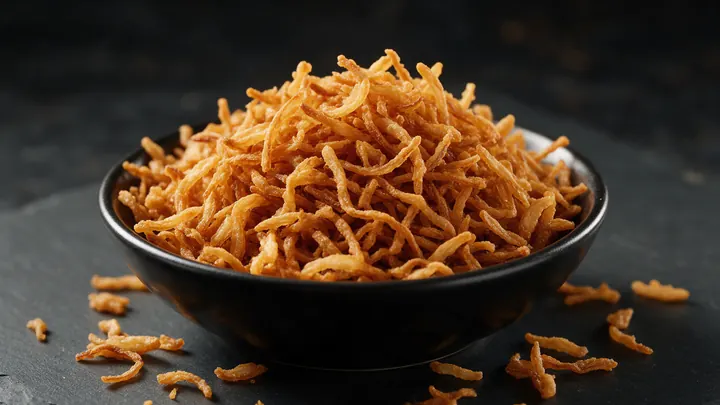
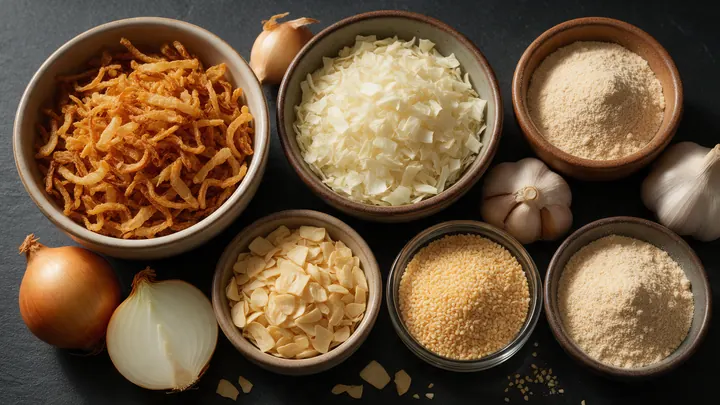
Texture decides the product family. A crunchy topping means fried onions: premium crispy fried onions (birista) when the dish is finished at the table or at service, dehydrated fried onions when the topping must survive a hot line, an oven or months on a shelf. Visible pieces mean minced or flakes. Fine and dissolving means powder or granules.
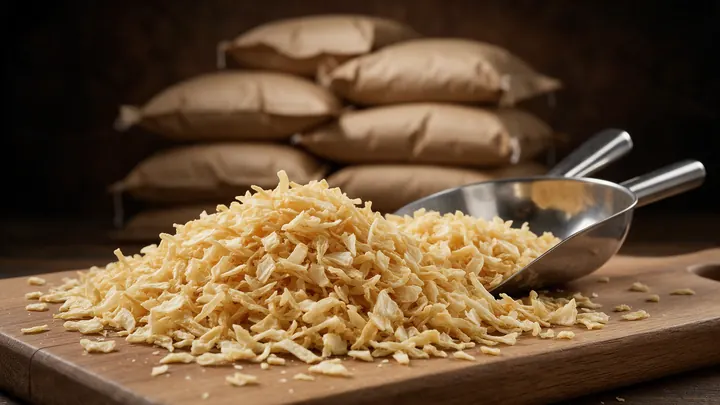
Process picks the particle size inside the family. Dry blending favours powder (fully uniform) or minced (visible, even pieces). Wet cooking and rehydration favour flakes, which soak in 10 to 15 minutes to pieces that look like sauteed onion, and granules, which disperse in liquids without clumping. High heat favours granules and minced over powder, which scorches quickly in a dry pan or under a grill.
Application adjusts the edge cases. Rice dishes and gravies that cook fried onion into the base get fresh fried onions, which save the hour of browning. Burger and QSR toppings get minced onion for the small, even dice. Every recommendation names the matching garlic form where one exists, because most blends and sauces use both.
The right form saves product, time and complaints
Choosing powder where flakes were needed leaves a sauce without the onion pieces the label promises; choosing flakes for a dry rub leaves hard flecks on the food. The wrong fried onion is just as costly: crispy birista simmered into a gravy turns soft, while fresh fried onions sprinkled on a salad are not crunchy. Matching form to process is the single biggest lever on flavour, texture and yield when you move from fresh to dehydrated onion and garlic.
Once you have a recommendation, the conversion calculator gives the dose that replaces your current fresh quantity and the bulk order calculator turns an annual requirement into pallets and containers. Samples of every form are available on request.
Choosing a form, answered
What is the difference between onion powder, granules, minced and flakes?
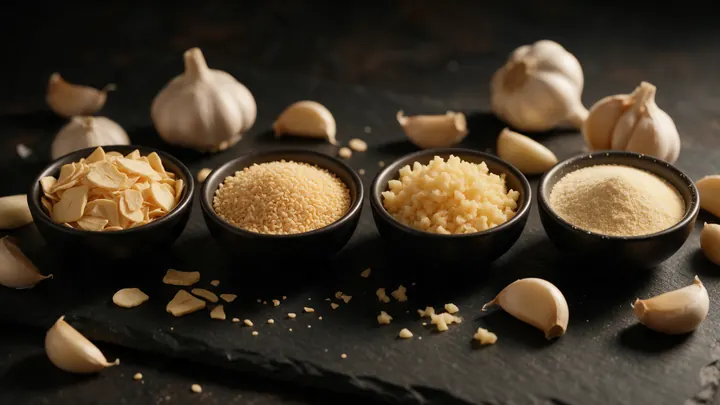
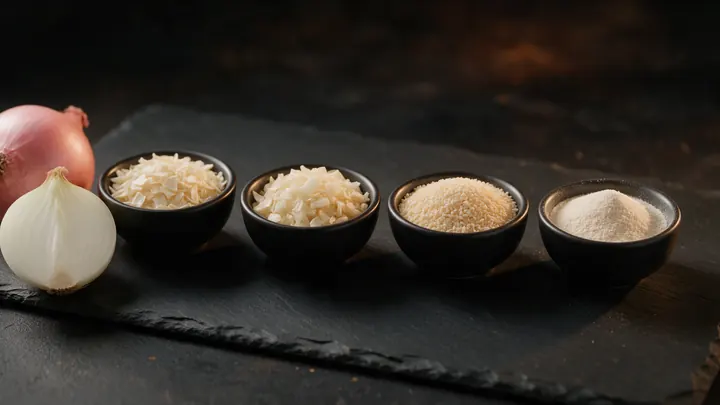
They are the same dehydrated onion cut to different particle sizes. Powder is milled fine and dissolves; granules are coarse grains (about 0.5 to 1 mm) that disperse without clumping; minced is small, even pieces (about 1 to 3 mm) that stay visible; flakes are larger pieces (about 3 to 10 mm) that rehydrate to look like sauteed onion.
Which form is best for seasoning blends and dry rubs?
Onion and garlic powder when the blend must be uniform and dissolve on the food, granules when you need free flow on a filling line or tolerance to high heat, and minced when visible onion pieces are part of the look, for example in burger seasonings and bagel toppings.
Which form is best for sauces, soups and gravies?
Flakes when you want recognisable onion pieces after simmering, granules when you want flavour without lumps, and powder when the sauce must stay smooth. All three can be added directly to anything that cooks for 15 minutes or more.
What is the difference between premium, fresh and dehydrated fried onions?
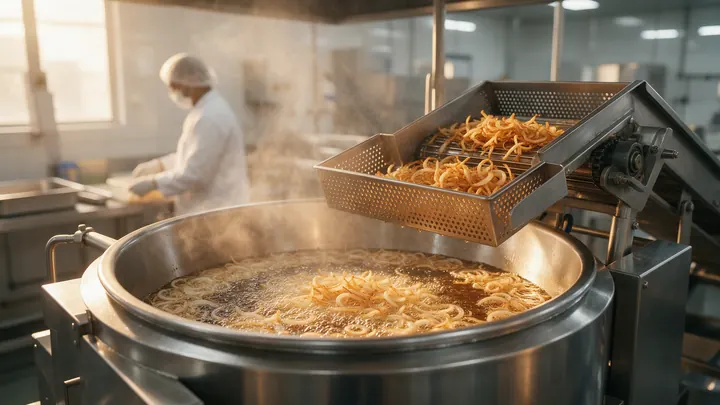
Premium (crispy) fried onions, also called birista, are golden caramelised slices used as a finishing garnish for biryani, pulao, salads and soups. Fresh fried onions are made to be cooked into gravies and biryani masala as a ready browned-onion base. Dehydrated fried onions are fried and then dried to a low moisture so they stay crunchy on burgers, pizzas and in ready-meal sachets and survive baking and reheating.
Can I get the same particle size in onion and garlic?
Yes. Our dehydrated onion and dehydrated garlic are offered in matching flakes, granules, minced and powder grades, so a blend can use the same mesh size for both and stay uniform.
What if my application is not in the list?
Choose the closest option and read the recommendation's reasoning; the logic transfers to most applications. Or send us a short description of the product and process through the enquiry form and we will recommend a specification and ship samples.
Now dose it and size it
Onion & Garlic Conversion Calculator
Fresh onion or garlic to powder, granules, minced, flakes or fried onions, and back again, in spoons, cups and grams, with a rehydration tip.
Open the toolBulk Order & Container Load Calculator
Turn a quantity in kg, MT or lb into bags or cartons, pallets and 20 ft or 40 ft container loads, with MOQ and shelf-life guidance, then request the quote.
Open the tool
Ready to move from numbers to samples?
Tell us the product, form, quantity and destination. Specifications, pricing and lead times come back within one working day.