When sourcing garlic powder for commercial food production, understanding garlic powder specifications is essential. Specifications determine the product’s consistency, safety, flavor, and performance in different food applications. Whether you manufacture snacks, spice blends, ready-to-eat meals, or sauces, choosing garlic powder with the right specifications ensures reliable product quality and customer satisfaction.
If you’re looking for a trusted dehydrated garlic powder manufacturer in India, knowing the key quality parameters will help you compare suppliers and purchase with confidence.
This guide explains the most important garlic powder specifications, including mesh size, moisture content, purity, color, aroma, and quality standards that every bulk buyer should understand.
Why Garlic Powder Specifications Matter
Garlic powder may look similar across suppliers, but its specifications can vary significantly. Small differences in moisture, particle size, or purity can affect the taste, shelf life, texture, and processing performance of your final product.
For food manufacturers, consistent specifications help:
- Maintain product quality
- Improve batch consistency
- Reduce production issues
- Meet food safety requirements
- Increase customer satisfaction
- Ensure smooth processing
Professional garlic powder manufacturers provide detailed product specifications so buyers know exactly what they are purchasing.
Key Garlic Powder Specifications Explained
Mesh Size
Mesh size refers to how fine or coarse the garlic powder is after grinding. It determines the particle size and influences mixing, texture, and appearance in finished products.
Common mesh sizes include:
- 40 Mesh – Coarse powder
- 60 Mesh – Medium-fine powder
- 80 Mesh – Fine powder
- 100 Mesh – Extra-fine powder
Choosing the Right Mesh Size
Different food applications require different particle sizes.
| Mesh Size | Common Applications |
| 40 Mesh | Seasoning blends, meat rubs |
| 60 Mesh | Snack seasonings |
| 80 Mesh | Spice mixes and sauces |
| 100 Mesh | Instant foods and dry blends |
Selecting the proper mesh size improves product uniformity and processing efficiency.
Moisture Content
Moisture is one of the most important specifications for garlic powder because it directly affects shelf life and product stability.
Most high-quality garlic powder has low moisture content to reduce microbial growth and maintain freshness.
Benefits of low moisture include:
- Longer shelf life
- Better flowability
- Reduced clumping
- Improved storage stability
- Lower risk of spoilage
Professional garlic powder suppliers carefully monitor moisture during production to ensure product consistency.
Purity
Purity refers to the percentage of genuine garlic present in the powder without unwanted additives or foreign materials.
High-purity garlic powder should contain:
- 100% dehydrated garlic
- No artificial fillers
- No foreign particles
- No unnecessary additives
Higher purity ensures stronger flavor and better product performance.
Color
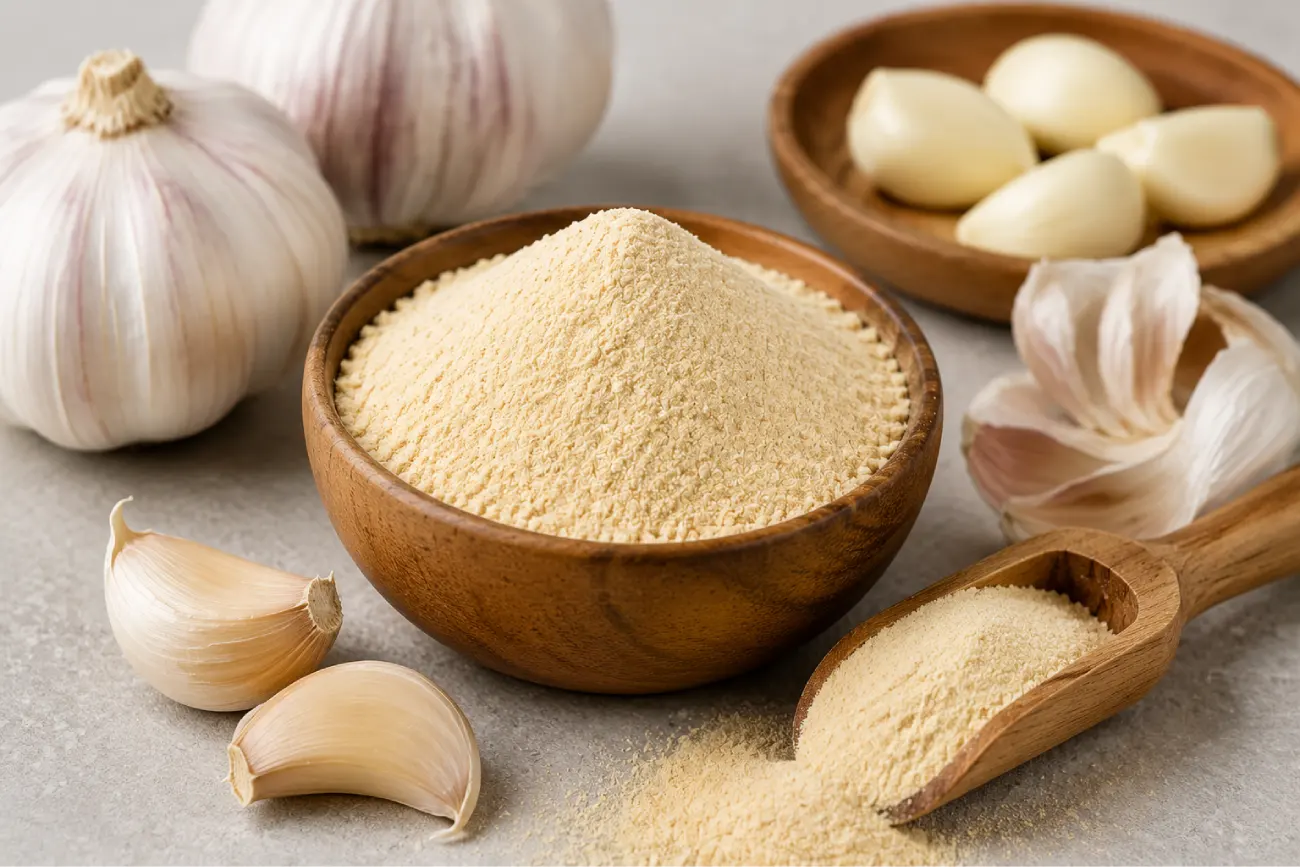
Good garlic powder typically has an off-white to light cream color.
Color variations may result from:
- Raw garlic quality
- Drying conditions
- Processing methods
- Storage practices
Uniform color usually indicates consistent manufacturing and quality control.
Aroma
Fresh garlic aroma is one of the easiest indicators of product quality.
Premium garlic powder should have:
- Strong natural garlic smell
- Fresh aroma
- No burnt odor
- No stale smell
A weak aroma may indicate poor-quality raw materials or improper storage.
Flavor Consistency
Commercial food manufacturers require garlic powder that delivers the same taste in every production batch.
Reliable garlic powder manufacturers maintain standardized processing to ensure consistent flavor, reducing variations in finished food products.
Particle Uniformity
Uniform particle size ensures garlic powder mixes evenly with other dry ingredients.
Benefits include:
- Better blending
- Even seasoning distribution
- Consistent product appearance
- Improved manufacturing efficiency
Microbiological Quality
Food safety is critical when sourcing dehydrated ingredients.
Professional suppliers test garlic powder for:
- Total Plate Count (TPC)
- Yeast and Mold
- Coliform bacteria
- Salmonella
- E. coli
These tests help ensure the product meets food safety standards before shipment.
Packaging Specifications
Proper packaging protects garlic powder from moisture, oxygen, and contamination.
Common packaging options include:
- Food-grade laminated bags
- HDPE-lined sacks
- Bulk cartons
- Customized export packaging
Good packaging helps preserve aroma, freshness, and shelf life during transportation.
Quality Standards Buyers Should Check
Before selecting a supplier, request a product specification sheet that includes:
- Mesh size
- Moisture content
- Purity
- Color
- Aroma
- Microbiological test results
- Shelf life
- Packaging details
- Batch information
These specifications help compare suppliers objectively.
How Garlic Powder Manufacturers Maintain Quality
Experienced garlic powder manufacturers in India follow strict quality procedures throughout production.
Typical quality processes include:
Raw Material Selection
Fresh, healthy garlic bulbs are carefully selected.
Cleaning and Peeling
Garlic is thoroughly washed and peeled before processing.
Controlled Drying
Modern dehydration systems remove moisture while preserving natural flavor.
Grinding
The dried garlic is ground according to the customer-required mesh size.
Laboratory Testing
Every production batch undergoes quality testing before packaging.
Final Inspection
Products are checked for consistency, cleanliness, and packaging integrity before dispatch.
Tips for Choosing the Right Garlic Powder Supplier
Not all suppliers offer the same quality standards.
Look for suppliers who provide:
- Complete specification sheets
- Food safety certifications
- Batch consistency
- Export-quality packaging
- Modern processing facilities
- Traceable production process
- Responsive technical support
Experienced garlic powder suppliers in India often provide customized mesh sizes and packaging options for industrial buyers.
Why India is a Trusted Source for Garlic Powder
India is one of the leading producers of dehydrated garlic products because of its strong agricultural base and modern food processing industry.
Working with a reliable garlic powder supplier in India offers several advantages:
- Competitive pricing
- Large production capacity
- Skilled manufacturing
- Export-ready logistics
- Consistent supply
- International quality standards
Many businesses also prefer partnering with a bulk garlic powder exporter for customized packaging and dependable global deliveries.
Industry Standards and Food Safety
Food manufacturers should source garlic powder from suppliers that follow recognized food safety systems such as HACCP, ISO 22000, and Good Manufacturing Practices (GMP).
For additional guidance on food safety and preventive controls, refer to the U.S. Food & Drug Administration (FDA). The FDA provides valuable resources on food processing, ingredient safety, and quality management that are widely recognized across the food industry.
Conclusion
Understanding garlic powder specifications helps businesses purchase ingredients that deliver consistent quality, a longer shelf life, and reliable processing performance. Parameters such as mesh size, moisture, purity, aroma, microbiological safety, and packaging all play a vital role in the final product.
Choosing experienced garlic powder manufacturers ensures better consistency, transparent quality control, and dependable supply for food production.
At Optimum Foods, we manufacture premium dehydrated garlic products using carefully selected raw materials, advanced dehydration technology, and rigorous quality testing to meet the needs of food manufacturers, exporters, distributors, and global buyers.
Frequently Asked Questions
- What are garlic powder specifications?
Garlic powder specifications describe the quality parameters of the product, including mesh size, moisture content, purity, color, aroma, microbiological safety, packaging, and shelf life. These specifications help food manufacturers evaluate product suitability and maintain consistent production quality.
- Which mesh size is best for garlic powder?
The ideal mesh size depends on the application. Coarser powders work well in seasoning blends, while finer mesh sizes are preferred for spice mixes, sauces, instant foods, and ready-to-eat products requiring smooth texture and even distribution.
- Why is moisture content important in garlic powder?
Low moisture content improves shelf life, reduces microbial growth, prevents clumping, and maintains product freshness. Reliable garlic powder suppliers monitor moisture levels carefully during manufacturing to ensure consistent quality and storage stability.
- How do garlic powder suppliers in India ensure product quality?
Professional garlic powder suppliers in India implement strict quality control measures, including raw material inspection, controlled dehydration, laboratory testing, microbiological analysis, and food-grade packaging. Many also follow HACCP and ISO-certified manufacturing systems.
- What should I check before buying from a garlic powder manufacturer in India?
Review the supplier’s specification sheet, food safety certifications, moisture content, mesh size, purity, packaging quality, microbiological reports, production capacity, and export experience. These factors help ensure reliable quality and long-term supply.
- Why should businesses choose a bulk garlic powder exporter?
A bulk garlic powder exporter offers large production capacity, customized packaging, export documentation, consistent quality, and dependable logistics. These advantages make sourcing easier for food manufacturers, distributors, and international importers requiring regular bulk shipments.