






















Dehydrated onion has become an essential ingredient across the global food industry due to its long shelf life, consistent quality and convenience. From packaged foods and seasonings to restaurant kitchens and ready-to-eat products, dehydrated onions help manufacturers and food businesses maintain efficiency without compromising flavor.
Businesses looking for reliable Dehydrated Onion Suppliers in India often prioritize quality, traceability and consistent supply to meet growing domestic and international demand. Companies such as Optimum Foods focus on delivering processed onion products that meet industry standards for food manufacturing, export and HoReCa applications.
In this guide, we’ll explore the different types, forms, manufacturing process and key benefits of dehydrated onions.
What Is Dehydrated Onion?
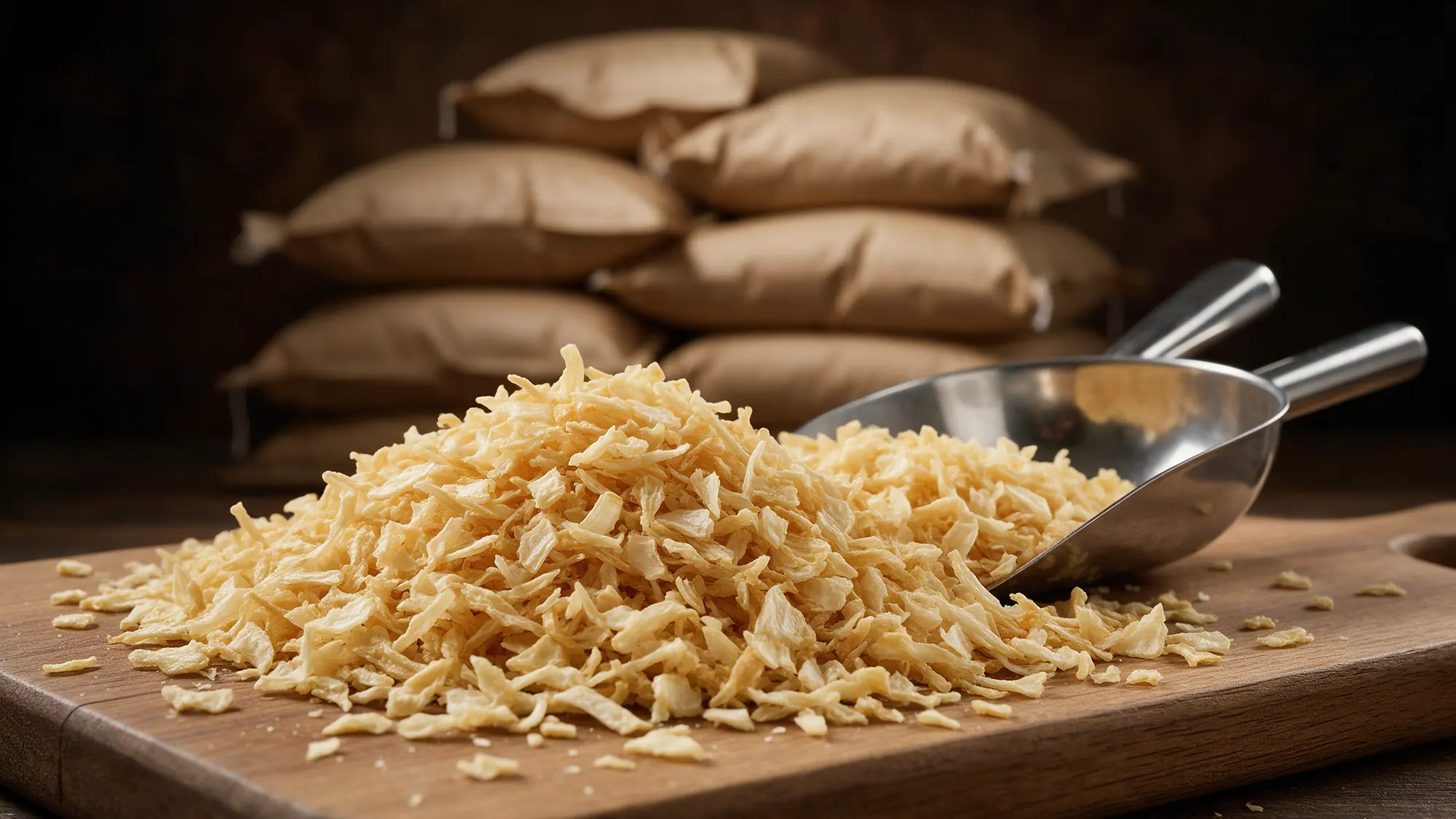
Dehydrated onion is a processed onion product made by removing moisture from fresh onions under controlled conditions. The dehydration process preserves the onion’s flavor, aroma and nutritional value while significantly extending its shelf life.
Because of its versatility, dehydrated onion is widely used in:
- Snack foods
- Spice blends
- Instant soups
- Frozen meals
- Sauces and dressings
- Bakery products
- Restaurant food preparation
- Meat and processed food manufacturing
Its lightweight nature also reduces transportation and storage costs compared to fresh onions.
Types of Dehydrated Onion
Different industries require different onion formats depending on their manufacturing needs.
White Dehydrated Onion
White onions are known for their sharp flavor and clean appearance. They are commonly used in:
- Seasoning blends
- Processed foods
- Instant meals
- Savory snacks
Red Dehydrated Onion
Red onions offer a slightly sweeter flavor profile and are often used in specialty food products and premium seasoning applications.
Pink Dehydrated Onion
Pink onions provide balanced flavor characteristics and are widely used across food processing industries.
Common Forms of Dehydrated Onion
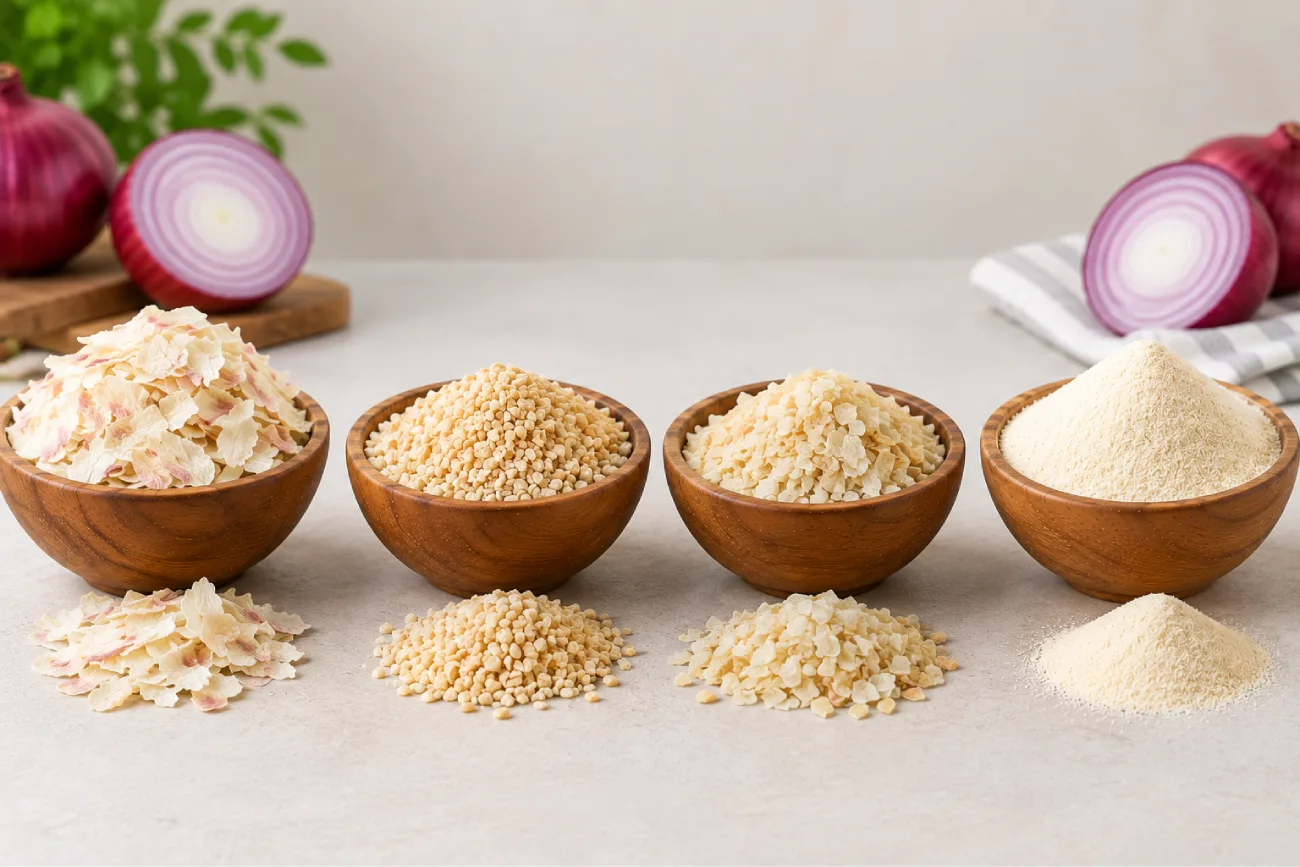
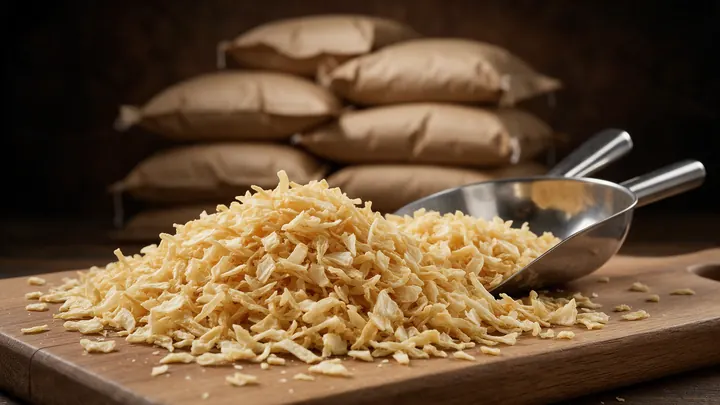
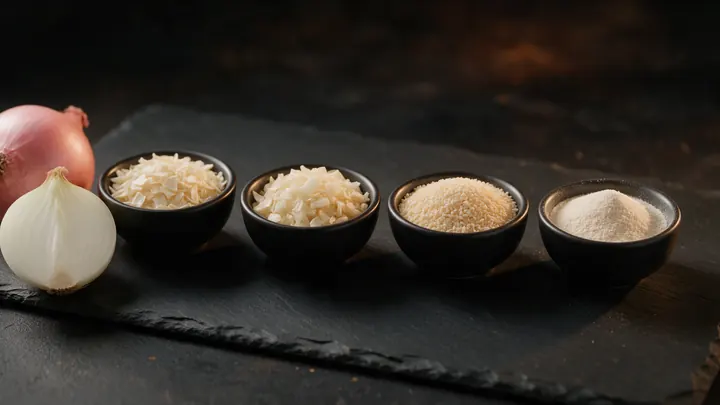
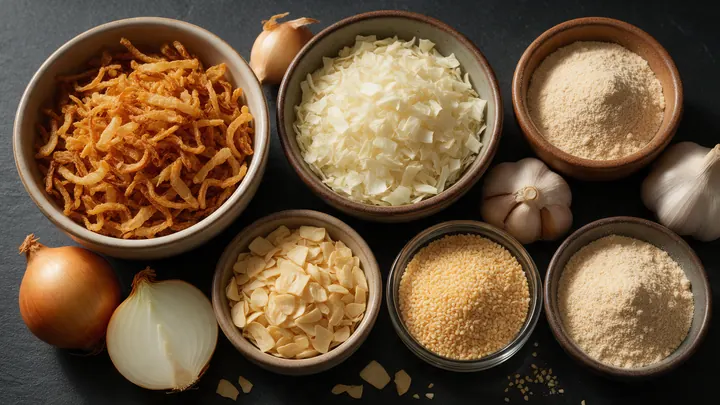
Onion Flakes
Onion flakes are larger dried onion pieces that retain visible texture. They are commonly added to:
- Soups
- Sauces
- Ready meals
- Food service recipes
Onion Granules
Granules are medium-sized particles that dissolve more easily during cooking.
Popular applications include:
- Spice mixes
- Marinades
- Dry seasoning blends
- Processed foods
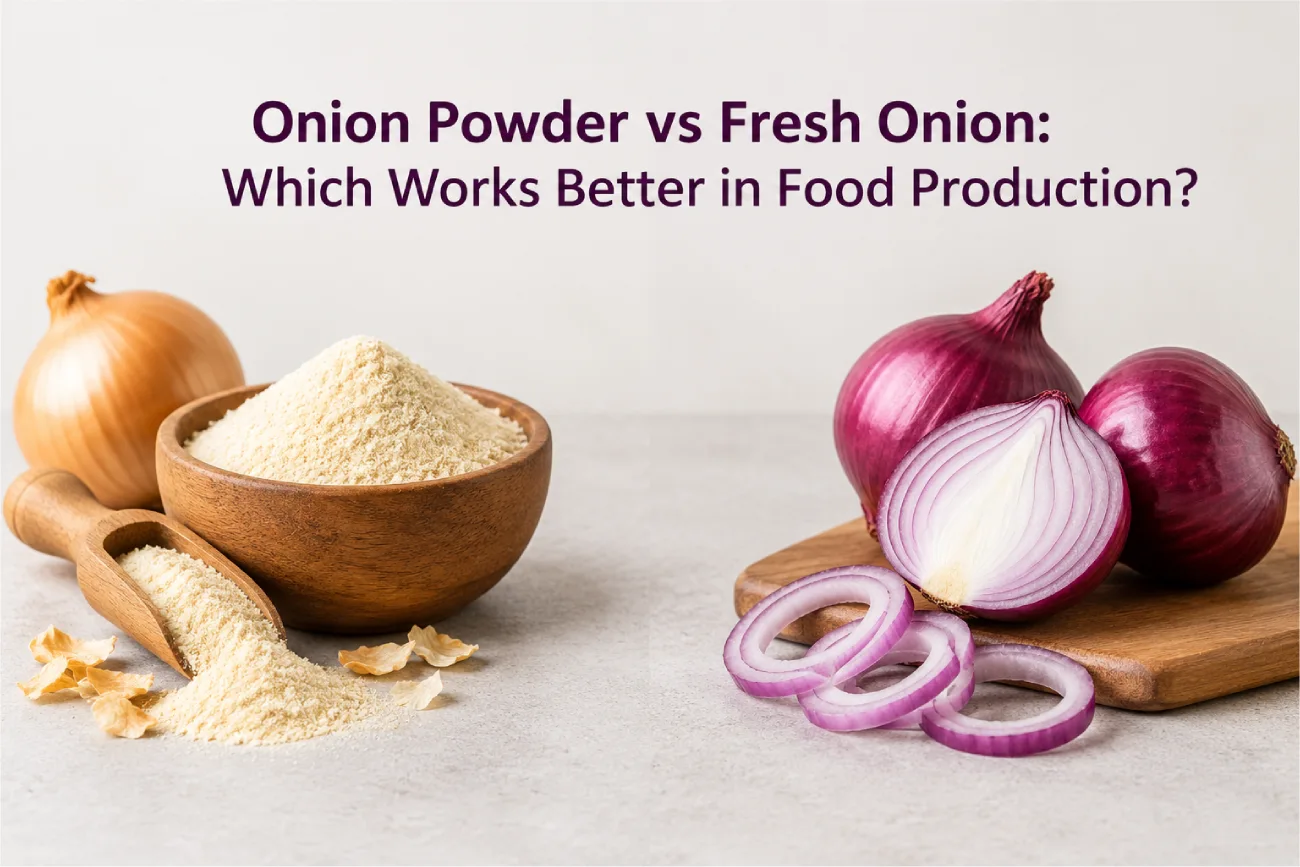
Onion Powder
Onion powder is finely ground dehydrated onion.
It is widely used for:
- Snack seasonings
- Sauces
- Instant food products
- Flavor enhancers
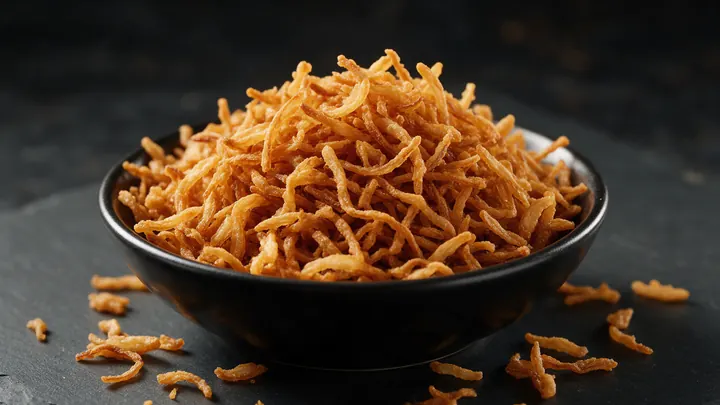
Chopped Onion
Chopped dehydrated onions closely resemble fresh chopped onions when rehydrated and are preferred in commercial kitchens and food manufacturing.
How Is Dehydrated Onion Produced?
The production process plays a critical role in determining product quality, flavor retention and food safety.
1. Raw Material Selection
The process begins with carefully selected fresh onions sourced from quality farming regions. Premium onions provide better flavor, color and yield.
2. Cleaning and Peeling
Fresh onions are thoroughly washed to remove dirt and impurities before the outer skin is removed.
3. Cutting and Sizing
The onions are sliced, chopped, or prepared according to the required final product specification.
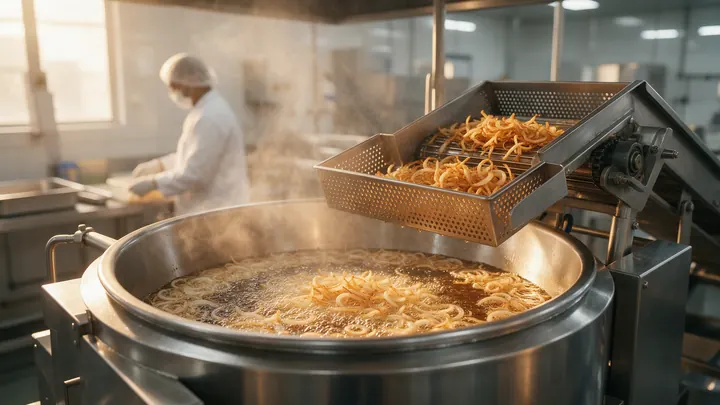
4. Dehydration Process
The onion pieces are dried using controlled hot-air dehydration systems that remove moisture while preserving flavor and aroma.
5. Quality Inspection
Products undergo quality checks for:
- Moisture levels
- Color consistency
- Particle size
- Microbiological safety
6. Packaging and Storage
Finished products are packed in food-grade packaging to protect freshness and ensure long-term storage stability.
According to the U.S. Food and Drug Administration (FDA), proper food processing and handling practices are essential for maintaining product quality and safety throughout the supply chain.
Key Benefits of Dehydrated Onion
Longer Shelf Life
One of the biggest advantages is extended storage life. Unlike fresh onions, dehydrated products can remain usable for months when stored properly.
Reduced Storage Requirements
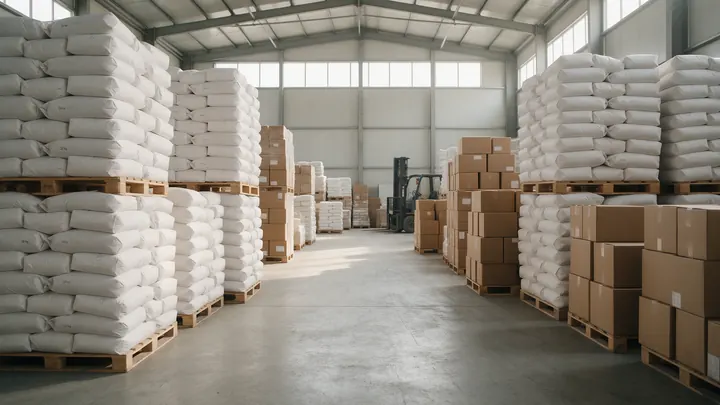
Since moisture is removed, dehydrated onions require significantly less storage space and refrigeration.
Consistent Flavor Profile
Food manufacturers benefit from uniform taste and quality across production batches.
Lower Transportation Costs
Reduced weight and volume help lower shipping expenses, especially for exporters and international buyers.
Improved Production Efficiency
Using ready-to-use onion ingredients reduces preparation time and labor costs in food manufacturing and commercial kitchens.
Year-Round Availability
Seasonal fluctuations in fresh onion supply have less impact on dehydrated onion availability, helping businesses maintain uninterrupted production.
Industries That Use Dehydrated Onion
Food Manufacturing Companies
Manufacturers use dehydrated onions in:
- Instant noodles
- Frozen foods
- Ready-to-eat meals
- Snack seasonings
HoReCa Industry
Hotels, restaurants and catering businesses value the convenience and consistency offered by dehydrated onion products.
Food Ingredient Distributors
Distributors supply onion ingredients to manufacturers, retailers and food service providers.
Exporters and International Buyers
Global buyers often source products from experienced dehydrated onion manufacturers in India due to the country’s strong agricultural base and processing capabilities.
Private Label Food Brands
Many private-label food brands use onion flakes, granules and powders in their packaged products.
Why India Is a Leading Source of Dehydrated Onion
India is among the world’s major onion-producing countries and has established itself as a reliable destination for food ingredient sourcing.
Advantages of working with a dehydrated onion supplier in India include the following:
- Access to quality raw materials
- Competitive pricing
- Export-ready infrastructure
- Large-scale production capacity
- Global compliance standards
Many dehydrated onion manufacturers in India serve markets across the UAE, Saudi Arabia, Oman, Qatar, Kuwait, the United Kingdom, Germany, the United States, Canada, Singapore and Malaysia.
How to Choose the Right Dehydrated Onion Supplier
When evaluating a bulk dehydrated onion supplier for global market requirements, consider the following:
- Food safety certifications
- Manufacturing capacity
- Product consistency
- Export experience
- Traceability systems
- Packaging options
- Delivery reliability
A trusted supplier should provide transparency throughout the sourcing and production process while maintaining consistent quality standards.
Conclusion
Dehydrated onion continues to be a valuable ingredient for food manufacturers, HoReCa businesses, distributors, exporters and private-label brands. Its versatility, long shelf life, ease of storage and consistent quality make it a practical choice for modern food production and large-scale operations.
By partnering with experienced suppliers such as Optimum Foods, businesses can access reliable dehydrated onion products that support efficient operations, maintain product consistency and meet the quality expectations of domestic and international markets.
Frequently asked questions
What are the different forms of dehydrated onion available?
Dehydrated onion is commonly available as flakes, granules, powder, minced onion, and chopped onion. Each form serves different applications, from seasoning blends and snack foods to soups, sauces, and industrial food manufacturing.
Why do food manufacturers prefer dehydrated onion over fresh onion?
Food manufacturers prefer dehydrated onion because it offers a longer shelf life, consistent flavor, reduced storage requirements, lower transportation costs, and improved production efficiency compared to fresh onions.
How do Dehydrated Onion Manufacturers in India maintain product quality?
Leading Dehydrated Onion Manufacturers in India follow strict quality control measures, including raw material selection, controlled dehydration processes, food safety testing, moisture control, and hygienic packaging practices to ensure product consistency.
What industries commonly use dehydrated onion products?
Industries such as food processing, snack manufacturing, spice blending, ready-to-eat meal production, catering services, restaurants, and private-label food brands regularly use dehydrated onion products in their operations.
How should dehydrated onion be stored for maximum shelf life?
Dehydrated onion should be stored in a cool, dry place away from direct sunlight and moisture. Properly sealed food-grade packaging helps maintain freshness, flavor, and product quality for extended periods.
What should buyers look for in a Dehydrated Onion Supplier in India?
Buyers should evaluate product quality, certifications, export experience, manufacturing capacity, packaging standards, supply consistency, and food safety compliance when selecting a Dehydrated Onion Supplier in India.
Why choose a Bulk Dehydrated Onion Supplier for Global Market requirements?
A Bulk Dehydrated Onion Supplier for Global Market needs can offer scalable production, reliable logistics, export documentation support, consistent quality standards, and customized packaging solutions for international buyers.