Fried onion is one of the most widely used ingredients in commercial food production because it delivers rich flavor, an attractive golden color, and a crispy texture. From ready-to-eat meals and spice blends to snacks and restaurant dishes, fried onions help manufacturers save preparation time while maintaining consistent product quality.
If you’re searching for a trusted premium fried onion manufacturer in India, understanding how fried onions are manufactured, the different types available, proper storage methods, and their industrial applications will help you choose the right product for your business.
This guide explains everything you need to know about fried onions, including their manufacturing process, quality standards, common uses, storage practices, and key benefits for food manufacturers.
What is fried onion?
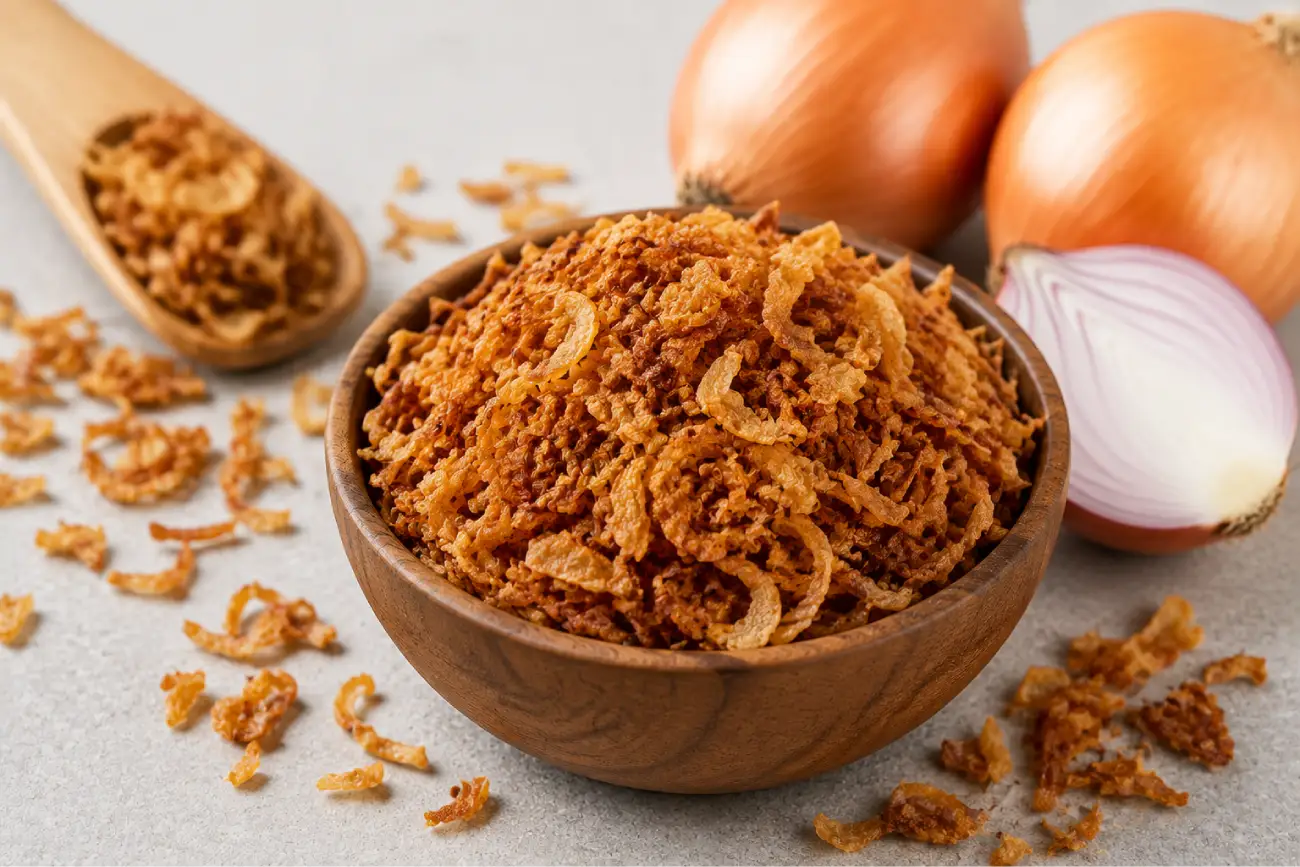
Fried onion is made by slicing fresh onions and frying them under carefully controlled conditions until they develop a uniform golden-brown color, crisp texture, and rich aroma. The finished product is cooled, excess oil is removed, and it is packed in food-grade packaging to maintain freshness.
Commercial fried onions are produced using standardized manufacturing processes that ensure consistent taste, appearance, and shelf life. This consistency makes them suitable for industrial food production where every batch must meet the same quality standards.
Types of Fried Onion
Different food applications require different styles of fried onion. Choosing the right variety depends on texture, moisture level, color, and intended use.
Premium Fried Onion
Premium fried onions are manufactured from carefully selected onions and fried under controlled temperatures to achieve consistent quality.
Common applications:
- Ready-to-eat meals
- Frozen foods
- Premium food products
- Export markets
- Biryani and rice dishes
Crispy Fried Onion
Crispy fried onions are known for their crunchy texture and appealing appearance.
They are widely used in:
- Burgers
- Sandwiches
- Pizza
- Salads
- Soups
- Snack toppings
Dehydrated Fried Onion
Dehydrated fried onions combine the flavor of fried onions with reduced moisture for improved shelf life.
They are suitable for:
- Instant food mixes
- Dry seasoning blends
- Soup mixes
- Export products
- Convenience foods
Birista
Birista consists of thin onion slices fried until uniformly golden and crisp.
Popular uses include:
- Biryani
- Korma
- Curries
- Gravies
- Traditional Indian cuisine
How Fried Onion is Manufactured
Professional manufacturing follows carefully controlled processes to maintain consistent quality.
1. Raw Material Selection
Fresh, mature onions are selected based on size, quality, and freshness.
2. Cleaning
The onions are washed thoroughly to remove dirt and impurities.
3. Peeling and Slicing
The onions are peeled and sliced uniformly to ensure even frying.
4. Controlled Frying
The slices are fried in high-quality edible oil at controlled temperatures. Maintaining the correct frying time and temperature is essential to achieve the desired color and crispness.
5. Oil Draining
After frying, excess oil is removed to improve texture and shelf life.
6. Cooling
The product is cooled under hygienic conditions before packaging.
7. Quality Inspection
Every batch is tested for:
- Color consistency
- Moisture content
- Crispness
- Aroma
- Oil quality
- Microbiological safety
8. Packaging
The finished product is packed in food-grade moisture-resistant packaging to maintain freshness during transportation and storage.
Quality Standards for Fried Onion
Consistent quality is critical for commercial food production.
Professional fried onion manufacturers evaluate products using several important parameters.
Color
Premium fried onions should have a uniform golden-brown appearance without burnt pieces.
Crispness
The product should remain crispy during storage and transportation.
Moisture Content
Low moisture helps improve shelf life and minimizes microbial growth.
Oil Quality
Manufacturers should use high-quality edible oil and maintain proper frying conditions to preserve flavor and safety.
Aroma
Fresh fried onions should have a rich onion aroma without burnt or stale odors.
Food Safety
Reliable manufacturers test products for microbiological safety and maintain hygienic production environments.
Common Uses of Fried Onion
Fried onions are used in a wide variety of food products.
Snack Manufacturing
They enhance the flavor and texture of:
- Namkeen
- Potato chips
- Extruded snacks
- Savory mixes
Ready-to-Eat Foods
Manufacturers use fried onions in:
- Instant meals
- Frozen foods
- Meal kits
- Rice dishes
Spice & Masala Industry
Fried onions add authentic flavor to seasoning blends, curry mixes, and spice formulations.
HoReCa Industry
Hotels, restaurants, and caterers rely on fried onions to reduce preparation time while maintaining consistent quality.
Meat Processing
Fried onions improve the flavor of sausages, kebabs, meat seasonings, and processed meat products.
Bakery and Convenience Foods
Many savory bakery items, wraps, and prepared foods use fried onions as an ingredient or topping.
Benefits of Fried Onion
Using commercial fried onions offers several operational advantages.
Consistent Quality
Every batch provides uniform taste, color, and texture.
Reduced Preparation Time
No peeling, slicing, or frying is required before use.
Longer Shelf Life
Properly packed fried onions remain fresh for extended periods when stored correctly.
Improved Production Efficiency
Manufacturers save labor, time, and production costs.
Reduced Food Waste
Ready-to-use products eliminate losses associated with fresh onions.
Export-Friendly
Proper packaging and controlled moisture make fried onions suitable for international shipments.
How to Store Fried Onion Properly
Correct storage helps preserve product quality and shelf life.
Follow these recommendations:
- Store in a cool and dry place.
- Keep away from direct sunlight.
- Use airtight food-grade containers after opening.
- Avoid exposure to moisture.
- Reseal packages immediately after use.
- Follow FIFO (First In, First Out) inventory practices.
- Keep storage areas clean and pest-free.
Proper storage maintains crispness, flavor, and freshness.
Choosing the Right Fried Onion Supplier
Selecting the right supplier helps ensure consistent product quality and uninterrupted supply.
Choose suppliers that provide:
- Food safety certifications
- Complete product specifications
- Modern manufacturing facilities
- Consistent batch quality
- Export-quality packaging
- Reliable production capacity
- Transparent quality testing
- Technical support
Experienced fried onion suppliers in India often offer customized packaging, different cut sizes, and product specifications for industrial buyers.
Why India Is a Leading Supplier of Fried Onions
India has become one of the leading producers of fried onion products due to its strong agricultural base and advanced food processing capabilities.
Working with a trusted fried onion supplier in India offers several advantages:
- Abundant raw material availability
- Competitive manufacturing costs
- Modern processing technology
- Export-ready packaging
- Large-scale production
- Reliable global supply
Many international buyers also partner with a bulk fried onion exporter to ensure consistent quality and dependable deliveries.
Food Safety and Industry Standards
When sourcing fried onions, choose manufacturers that follow internationally recognized food safety systems such as HACCP, ISO 22000, and Good Manufacturing Practices (GMP).
For additional guidance on food manufacturing and ingredient safety, visit the U.S. Food & Drug Administration (FDA). The FDA provides valuable resources on food safety, preventive controls, and quality management practices.
Conclusion
Fried onion is a versatile ingredient that delivers convenience, consistent quality, and authentic flavor across a wide range of food applications. Whether you require premium fried onions for ready meals, crispy fried onions for snacks, dehydrated fried onions for seasoning blends, or birista for traditional recipes, choosing the right supplier makes a significant difference.
Partnering with experienced fried onion manufacturers ensures consistent product quality, reliable supply, and compliance with food safety standards.
At Optimum Foods, we manufacture premium fried onion products using carefully selected onions, advanced processing technology, and strict quality control to meet the needs of food manufacturers, exporters, distributors, and global buyers.
Frequently Asked Questions
- What is fried onion used for?
Fried onion is widely used in ready-to-eat meals, biryani, curries, snack foods, seasoning blends, soups, frozen foods, bakery products, and restaurant kitchens. It adds rich flavor, crispy texture, and attractive color while reducing food preparation time.
- What are the different types of fried onion?
The most common types include premium fried onion, crispy fried onion, dehydrated fried onion, and birista. Each type is designed for different food applications based on texture, moisture content, shelf life, and appearance.
- How should fried onion be stored?
Store fried onions in airtight food-grade packaging in a cool, dry place away from sunlight and moisture. Proper storage preserves crispness, flavor, aroma, and shelf life while preventing contamination and quality loss.
- Why choose Fried Onion suppliers in India?
Professional fried onion suppliers in India offer modern manufacturing facilities, competitive pricing, export-quality packaging, strict quality control, and reliable production capacity. These advantages make India a preferred sourcing destination for bulk fried onion products.
- What should I check before buying from a fried onion manufacturer in India?
Review product specifications such as color, crispness, moisture content, oil quality, microbiological safety, packaging, shelf life, and food safety certifications. Reliable manufacturers also provide consistent batch quality and technical documentation.
- Why work with a bulk fried onion exporter?
A bulk fried onion exporter provides consistent production capacity, customized packaging, export documentation, dependable logistics, and reliable quality control. These services help food manufacturers and international buyers maintain uninterrupted ingredient supplies.