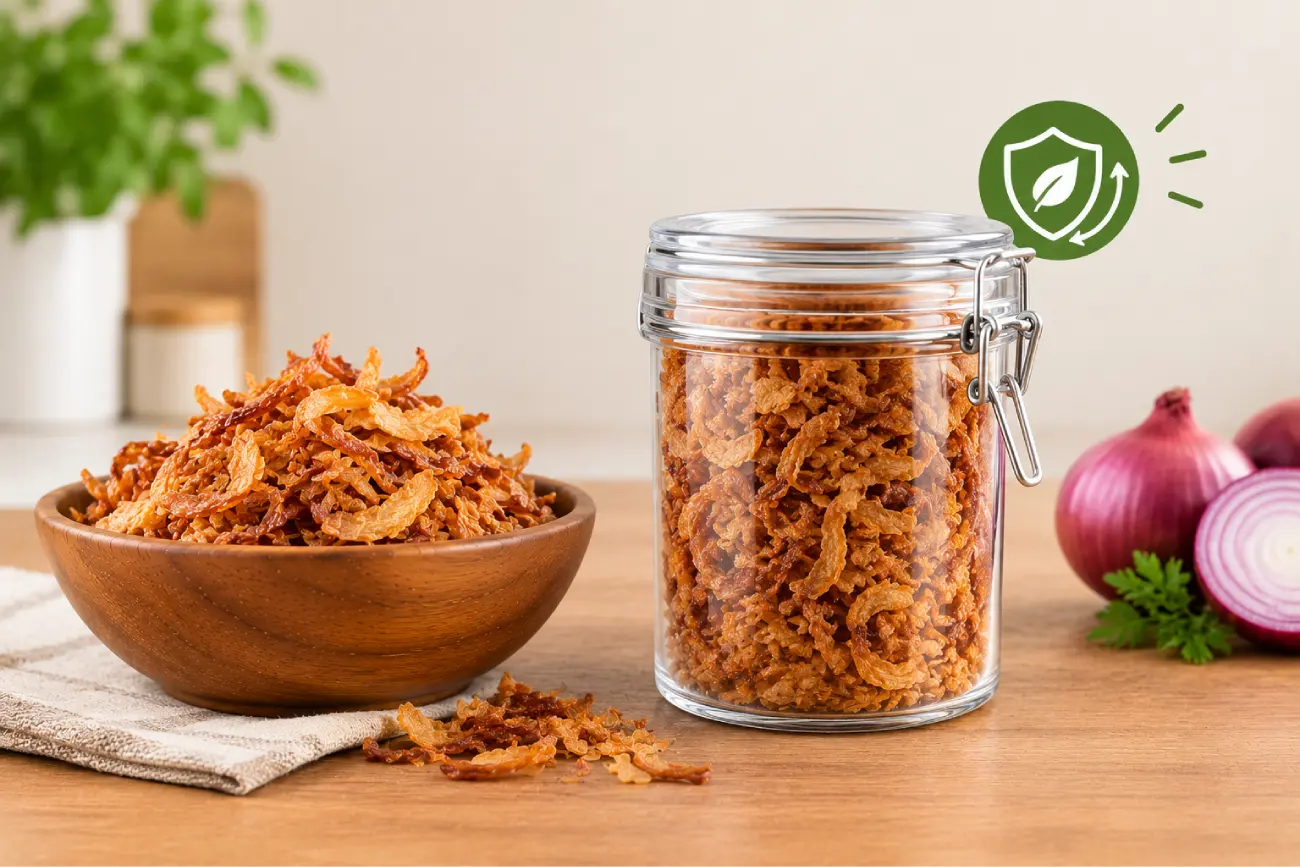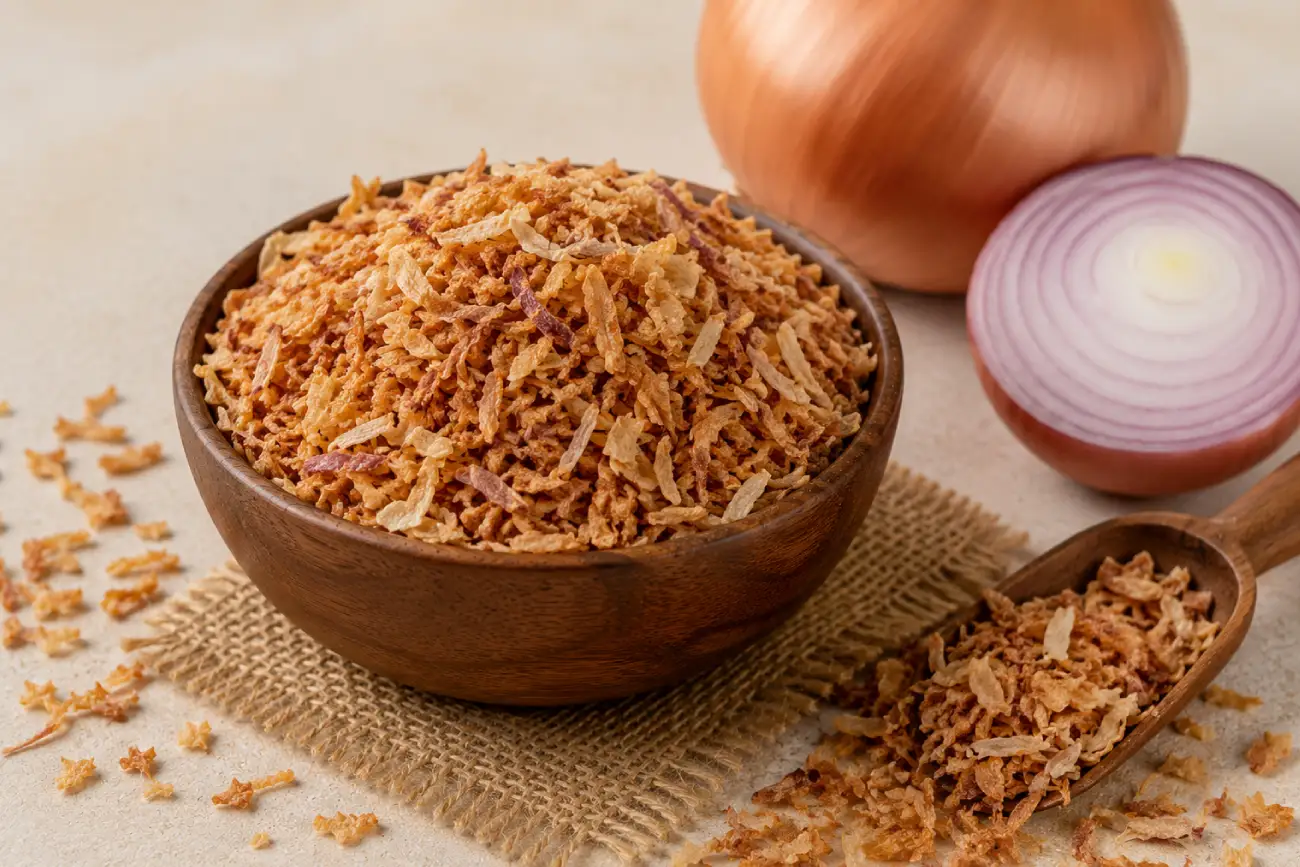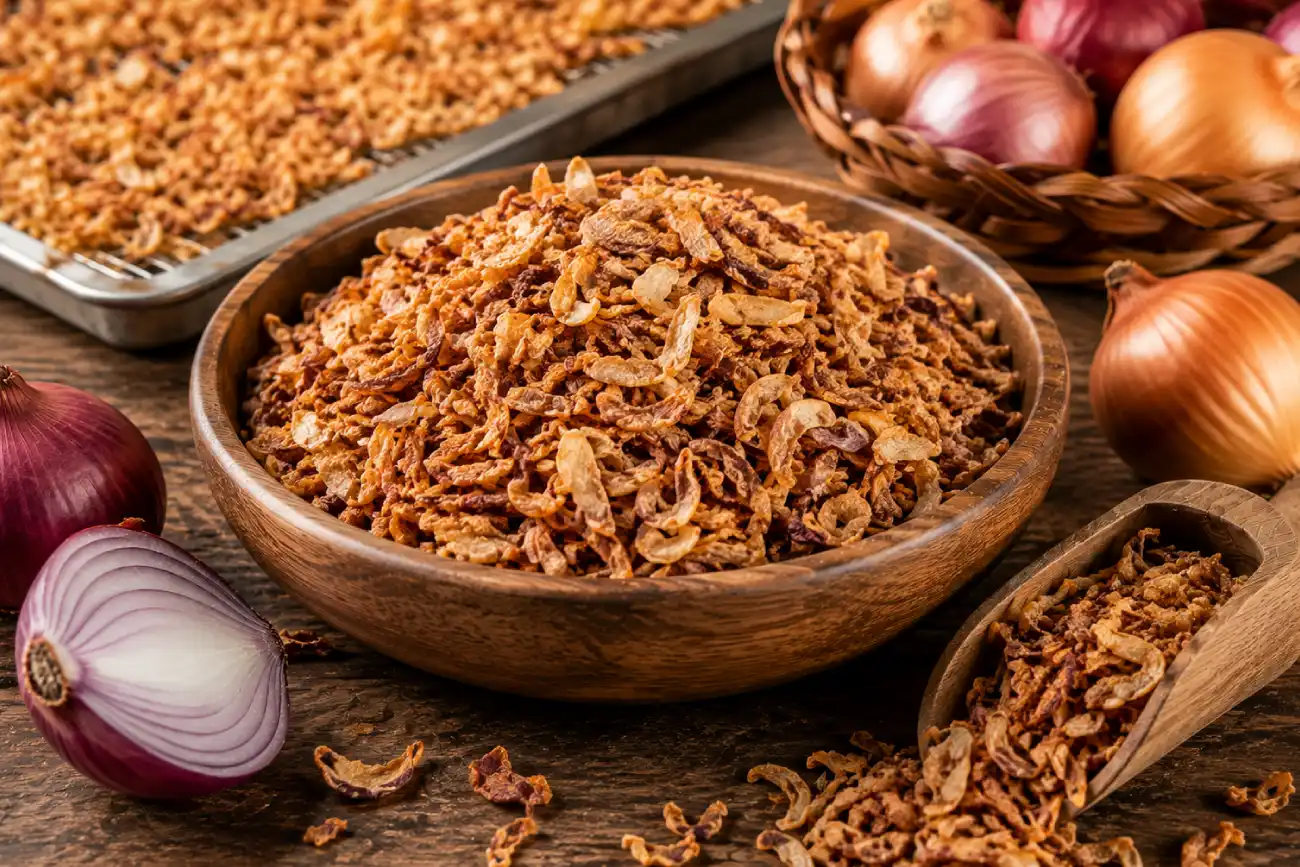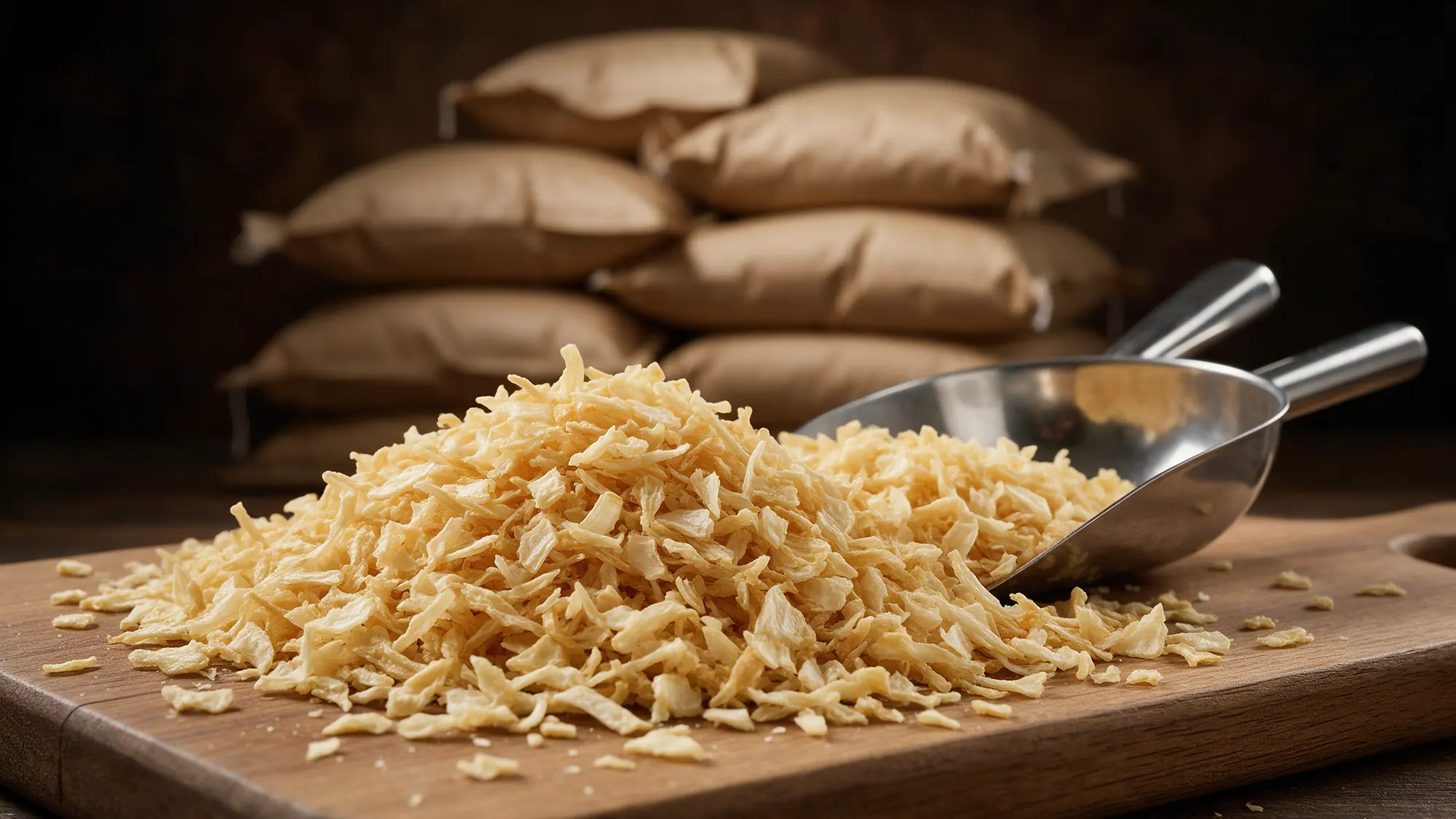























When cooking at scale, choosing between dehydrated fried onions and fresh fried onions can affect preparation time, consistency, storage, wastage and overall kitchen efficiency. Both options have their place, but the better choice depends on how your business operates.
For buyers looking for consistent fried onion quality in larger quantities, understanding what to expect from dehydrated fried onion suppliers in India can make bulk purchasing decisions easier.
This comparison is especially useful for food manufacturers, snack and namkeen companies, spice brands, restaurants, caterers, ready-to-eat food businesses and bulk traders.
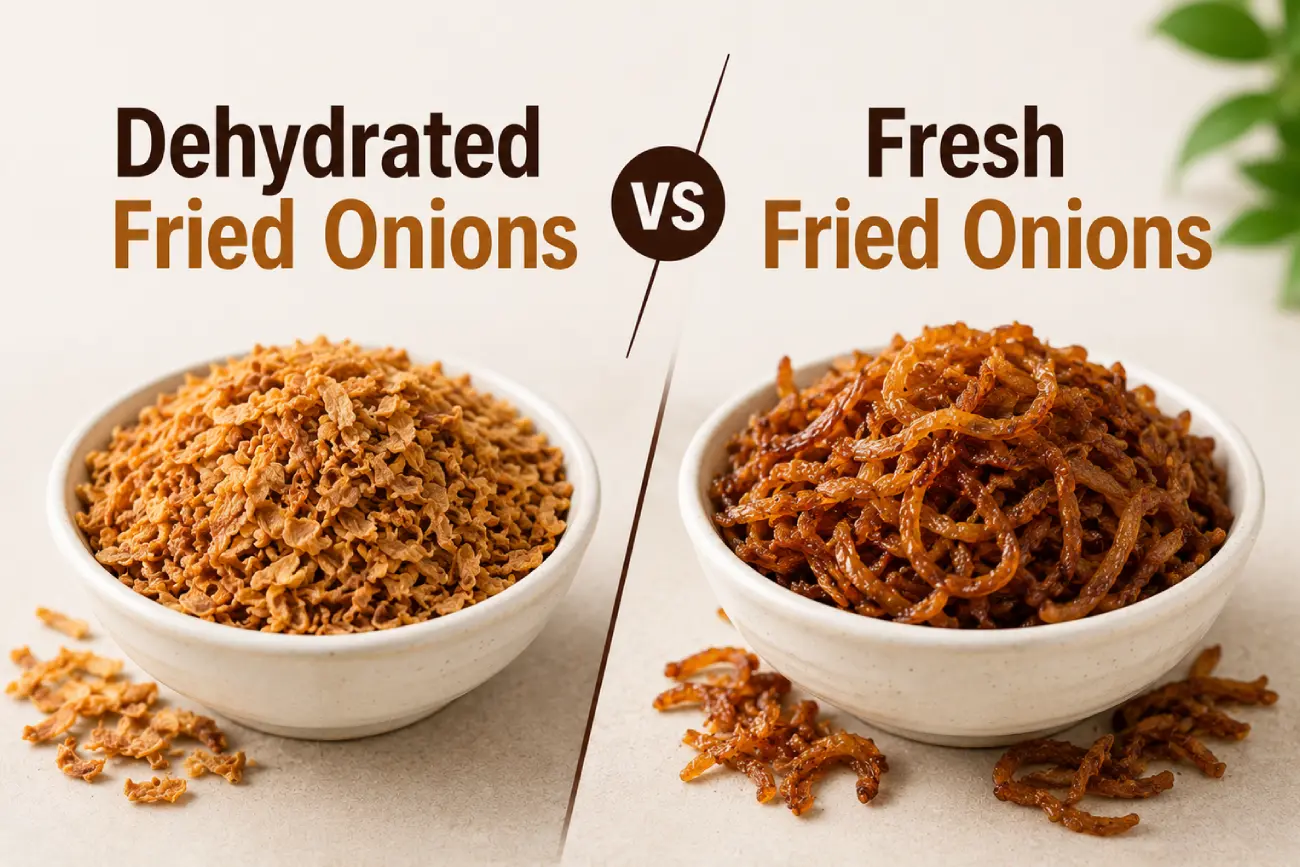
What Are Dehydrated Fried Onions?
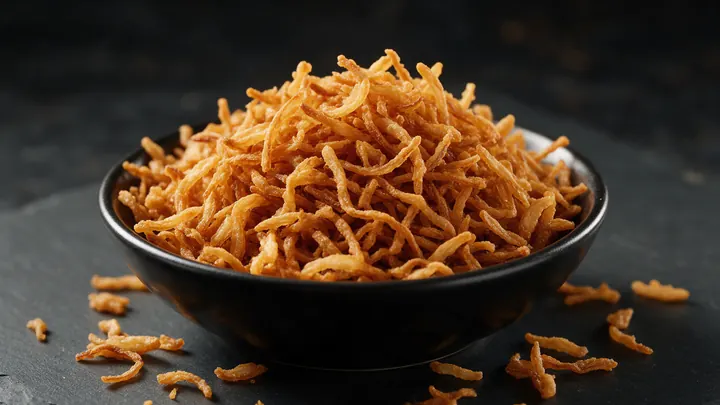
Dehydrated fried onions are onions that are processed, fried and then treated to reduce moisture and help maintain their desired texture and shelf stability.
Instead of preparing onions from scratch every time, commercial kitchens and food manufacturers can use a ready-to-use ingredient.
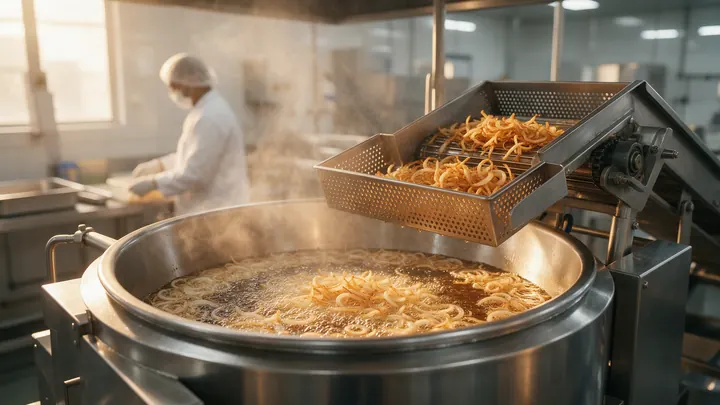
A typical commercial process includes:
- Selecting and sorting suitable onions
- Cleaning and peeling
- Slicing to the required specification
- Controlled frying
- Removing excess oil
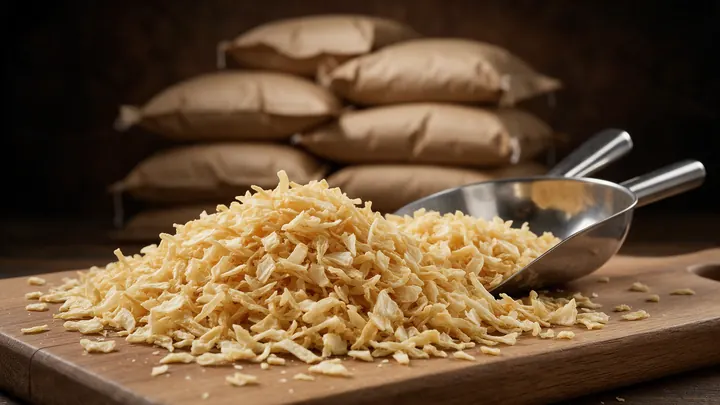
- Dehydration
- Quality inspection
- Food-grade packaging
The exact process and specifications can vary between manufacturers. For B2B buyers, factors such as moisture, color, slice size, crispness, oil content, packaging and batch consistency should be checked before placing a large order.
What Are Fresh Fried Onions?
Fresh fried onions are prepared by slicing fresh onions and frying them immediately before use or in batches for short-term consumption.
They can provide excellent aroma, color and texture when freshly prepared. This makes them popular in restaurants and kitchens where fried onions are produced and consumed quickly.
However, producing them in large quantities requires more preparation.
A commercial kitchen may need to manage:
- Fresh onion procurement
- Peeling and slicing
- Labour
- Frying equipment
- Cooking oil
- Temperature control
- Oil filtration and replacement
- Cleaning
- Short-term storage
As production volume increases, these activities can consume significant time and resources.
Dehydrated Fried Onions vs Fresh Fried Onions
The main differences become clearer when comparing them based on commercial requirements.
| Factor | Dehydrated Fried Onions | Fresh Fried Onions |
| Preparation | Ready to use | Requires preparation |
| Labor requirement | Lower | Higher |
| Storage | Easier for bulk inventory | More limited |
| Consistency | Generally more consistent batch to batch | Can vary with preparation |
| Shelf life | Longer when properly packed and stored | Shorter |
| Production speed | Faster | Slower |
| Wastage | Can be lower with controlled purchasing | Can be higher |
| Bulk food production | Highly practical | More labor-intensive |
| Custom preparation | Limited by supplied specification | Easy to adjust during cooking |
| Equipment needs | Minimal at point of use | Frying equipment required |
The right choice depends on your production model, product requirements and purchasing volume.
1. Preparation Time and Labor
For bulk cooking, preparation time can become a major operating cost.
Fresh frying requires workers to handle onions from preparation through frying. Large batches also require attention to frying temperature and cooking time.
Dehydrated fried onions are ready to use. Staff can add them directly to dishes or production batches according to the recipe.
For food manufacturers and high-volume kitchens, this can simplify production planning and reduce the number of preparation steps.
2. Consistency in Commercial Production
Consistency matters when a food business produces the same recipe every day.
Freshly fried onions can vary depending on:
- Onion variety
- Slice thickness
- Frying temperature
- Frying duration
- Oil condition
- Batch size
- Operator experience
A reliable dehydrated fried onion manufacturer in India can produce according to defined specifications, helping buyers achieve more predictable results.
Before purchasing, businesses should request product specifications and samples. Checking several batches is also useful when consistency is critical to the final product.
3. Storage and Shelf Stability
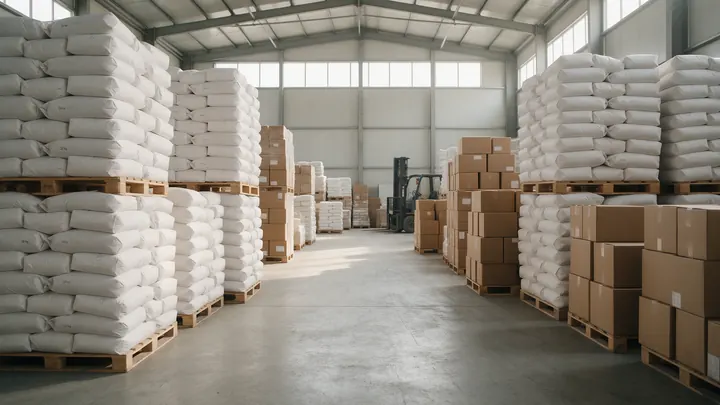
One of the biggest advantages of processed onion ingredients is easier inventory management.
Fresh fried onions are not ideal for maintaining a large inventory over extended periods. Their texture and quality can change relatively quickly depending on preparation and storage conditions.
Dehydrated products have lower moisture and are designed for longer storage when properly packed and handled. The USDA notes that dry foods can lose quality when exposed to moisture and recommends protecting dry goods from damp conditions.
For bulk buyers, moisture-resistant packaging and suitable warehouse conditions are therefore important.
4. Cost Beyond the Purchase Price
Comparing only the price per kilogram can give an incomplete picture.
Fresh frying also involves:
- Labor costs
- Cooking oil
- Electricity or fuel
- Equipment maintenance
- Cleaning
- Preparation time
- Raw material handling
- Product wastage
A bulk dehydrated fried onion purchase may reduce several of these operational requirements.
However, the actual cost advantage depends on purchase price, usage volume, recipe requirements and local operating costs. Businesses should compare the total cost per usable kilogram rather than only the supplier’s quoted price.
5. Quality and Food Safety
Food safety should be part of the purchasing decision, especially for commercial food production.
When evaluating dehydrated fried onion suppliers in India, buyers should ask about:
- Raw material sourcing
- Processing controls
- Food safety systems
- Product specifications
- Batch testing
- Packaging standards
- Traceability
- Storage recommendations
- Applicable certifications
A supplier should be able to clearly explain how the product is processed and packed.
The USDA also highlights the importance of protecting dry foods from moisture because damp conditions can contribute to quality deterioration and mold growth.
6. Which Option Works Better for Different Businesses?
Food Manufacturers
Dehydrated fried onions are generally more practical when manufacturers need repeatable quantities and simplified production.
They can be incorporated into ready meals, sauces, snack products, spice blends and other processed foods.
Hotels, Restaurants and Caterers
For high-volume kitchens, ready-to-use fried onions can reduce preparation work. Fresh frying may still make sense when a business specifically wants freshly prepared onions or has the labor and equipment available.
Snack and Namkeen Manufacturers
Consistency and production speed are important for snack manufacturing. A standardised fried onion ingredient can help maintain repeatable flavor and texture across production batches.
Spice and Masala Brands
Dehydrated fried onions can be used as an ingredient in seasoning blends and convenience food formulations where controlled specifications are important.
Exporters and Bulk Traders
For traders and exporters, packaging, product specifications, shelf-life requirements, documentation and logistics become particularly important. Working with established dehydrated fried onion manufacturers can simplify bulk sourcing.
How to Choose a Dehydrated Fried Onion Supplier
Do not select a supplier based only on price.
Before ordering, check:
- Product specification: Confirm size, colour, texture, moisture and other required parameters.
- Sample quality: Test the product in your actual recipe or production process.
- Batch consistency: Compare samples from different production batches where possible.
- Packaging: Ensure the packaging protects the product against moisture and handling damage.
- Food safety: Review relevant certifications and quality-control practices.
- Supply capacity: Confirm that the supplier can support your expected monthly volume.
- Export capability: International buyers should check documentation and shipping requirements.
- Communication: A reliable supplier should respond clearly about specifications, MOQ, lead time and packaging.
A dehydrated fried onion distributor in India may suit smaller or regional requirements, while direct sourcing from a manufacturer can be more suitable for larger recurring orders.
So, Which Is Better for Bulk Cooking?
For high-volume commercial cooking, dehydrated fried onions are often the more practical option because they reduce preparation work, simplify storage and provide a ready-to-use ingredient.
Fresh fried onions remain useful when freshness, immediate preparation, or a specific cooking style is the priority.
The best decision is therefore not simply about choosing between “fresh” and “dehydrated”. It is about comparing total operating cost, labour, quality consistency, storage requirements, production volume and the final application.
For businesses buying regularly, requesting samples and comparing actual performance in production is one of the most reliable ways to make the decision.
Optimum Foods supplies dehydrated and fried onion products for food businesses, bulk buyers, distributors and international customers, with a focus on consistent processing and food-grade production.
Frequently asked questions
Are Dehydrated Fried Onions better than fresh fried onions for bulk cooking?
For many high-volume kitchens, Dehydrated Fried Onions are more convenient because they are ready to use and require less preparation. Fresh fried onions can still be preferable when freshly fried texture or immediate preparation is important. The better choice depends on labor, production volume, storage, recipe requirements and total operating cost.
Why do food manufacturers use Bulk Dehydrated Fried Onion?
Food manufacturers often use Bulk Dehydrated Fried Onion because it can simplify production and reduce preparation work. It can provide a consistent ingredient for ready meals, sauces, snacks, spice blends and other food products. Buyers should verify specifications, packaging, food safety controls and batch consistency before ordering in large quantities.
How should I choose Dehydrated Fried Onion suppliers in India?
When comparing Dehydrated Fried Onion suppliers in India, check product specifications, sample quality, processing controls, certifications, packaging, MOQ, production capacity, lead times and export support. Price is important, but it should be compared with product quality and total usable cost rather than considered independently.
Can Dehydrated Fried Onions reduce preparation costs?
They can reduce several preparation-related costs because the onions do not need to be peeled, sliced and fried at the point of use. Businesses may also reduce labor, frying equipment usage, cleaning and cooking oil requirements. Actual savings vary according to production volume, local labor costs, recipes and supplier pricing.
How should bulk dehydrated fried onions be stored?
Bulk dehydrated fried onions should generally be kept in sealed, food-grade packaging in a cool, clean and dry storage area. Moisture exposure can affect crispness and quality. Businesses should always follow the supplier's recommended storage conditions, packaging instructions and product-specific shelf-life guidance.
Should I buy directly from a Dehydrated Fried Onion manufacturer in India?
Direct purchasing from a Dehydrated Fried Onion manufacturer in India can make sense for businesses with recurring or larger requirements. It may provide better access to product specifications, customized packaging, production capacity and batch information. Smaller buyers may instead find a distributor more suitable for their order volume and delivery needs.