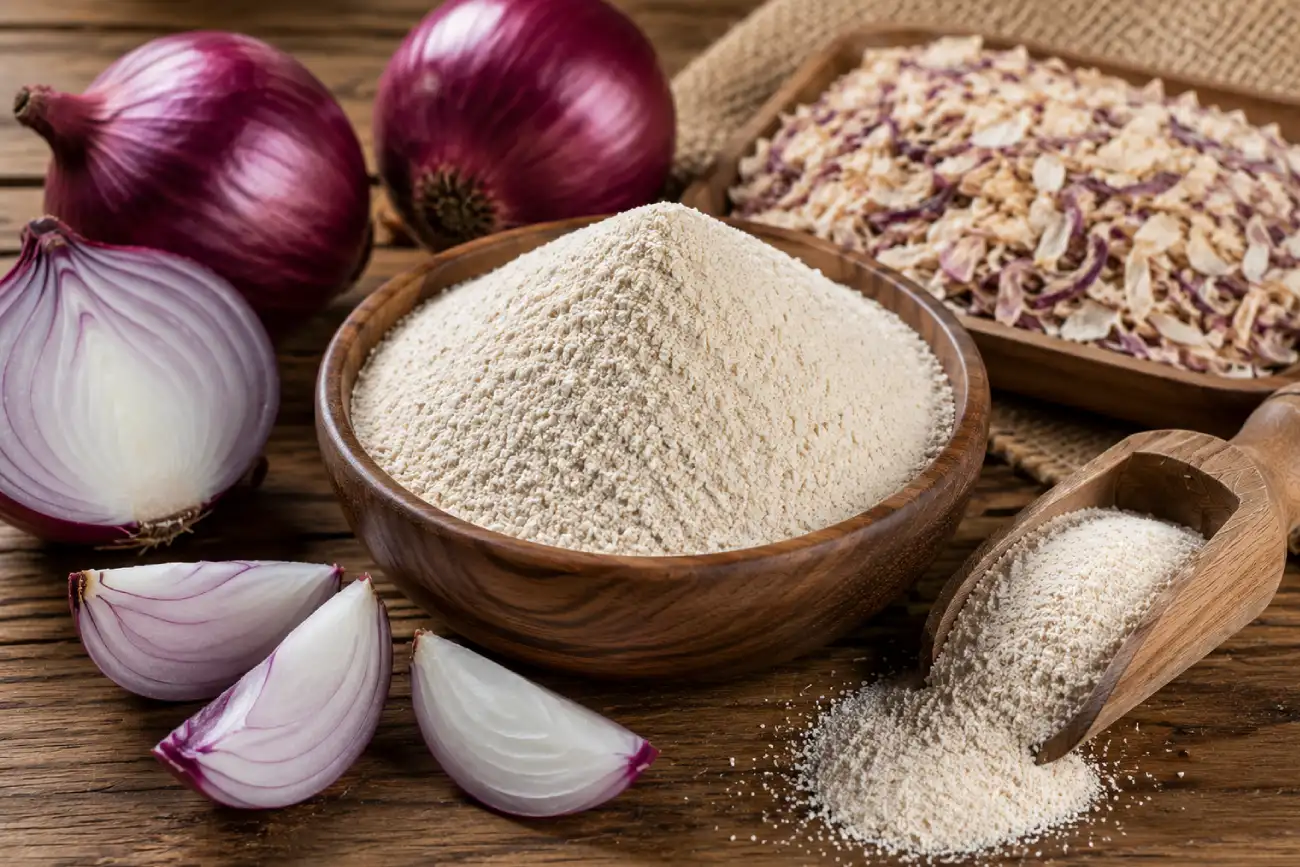
Proper storage is essential for maintaining the quality, flavor and shelf life of dehydrated onion powder. Whether you are a food manufacturer, spice company, restaurant, exporter, or distributor, storing onion powder correctly helps preserve its freshness while reducing waste and protecting product quality. Even premium-quality onion powder can lose its aroma, color and free-flowing texture if exposed to moisture, heat, or air for extended periods.
If you source your products from trusted dehydrated onion suppliers in India, following recommended storage practices will help you get the best performance from every batch.
In this guide, we explain practical storage methods that help maintain the quality of dehydrated onion powder from warehouse to production line.
Why Proper Storage Matters
Dehydrated onion powder is designed for long shelf life, but its stability depends heavily on storage conditions.
Proper storage helps:
- Preserve natural onion flavor
- Maintain fresh aroma
- Prevent caking
- Protect color consistency
- Extend product shelf life
- Reduce product wastage
- Improve manufacturing efficiency
For businesses purchasing bulk dehydrated onion powder, proper storage also protects inventory investments and ensures consistent production quality.
What Can Damage Dehydrated Onion Powder?
Several environmental factors can reduce the quality of onion powder.
The most common causes include:
- Moisture
- High humidity
- Heat
- Direct sunlight
- Oxygen exposure
- Poor packaging
- Cross-contamination
- Improper warehouse handling
Fortunately, these risks can be minimized through simple storage practices.
Store in a Cool, Dry Place
Temperature and humidity play a major role in maintaining product quality.
Store onion powder in:
- Clean warehouses
- Dry storage rooms
- Cool environments
- Well-ventilated areas
Avoid placing products near:
- Steam lines
- Cooking equipment
- Hot machinery
- Windows with direct sunlight
Stable storage conditions help preserve both flavor and texture.
Protect Against Moisture
Moisture is one of the biggest enemies of dehydrated onion powder.
When moisture enters the packaging, the powder may:
- Form lumps
- Lose its free-flowing texture
- Develop microbial risks
- Lose flavor intensity
- Become difficult to process
Always keep containers tightly sealed immediately after use.
Use Airtight Containers
Once the original packaging has been opened, transfer unused powder into airtight food-grade containers if the original package cannot be resealed properly.
Suitable storage containers include:
- Food-grade plastic containers
- Stainless steel containers
- Moisture-resistant storage bins
- Vacuum-sealed packaging where appropriate
Good sealing protects the product from humidity and airborne contaminants.
Keep Away from Strong Odors
Onion powder can absorb surrounding odors during storage.
Avoid storing it near:
- Cleaning chemicals
- Strong spices
- Solvents
- Perfumes
- Detergents
- Fresh produce with strong aromas
Maintaining a clean storage environment helps preserve the product’s natural flavor profile.
Maintain Proper Packaging
Packaging plays a vital role in extending product shelf life.
Commercial buyers should choose suppliers using:
- Multi-layer laminated bags
- Moisture-barrier packaging
- Oxygen-resistant packaging
- Food-grade liners
- Export-quality bulk bags
Professional dehydrated onion powder manufacturers typically offer packaging specifically designed for commercial storage and transportation.
Follow FIFO Inventory Management
FIFO (First In, First Out) is one of the most effective inventory practices for food ingredients.
Using older stock before newly received inventory helps:
- Reduce product aging
- Prevent unnecessary waste
- Improve stock rotation
- Maintain consistent freshness
FIFO is widely recommended in commercial food manufacturing facilities.
Handle Products Carefully
Packaging damage can reduce product quality even before the powder reaches production.
Best handling practices include:
- Avoid puncturing bags.
- Do not drag packages across rough surfaces.
- Stack bags safely.
- Keep products away from wet floors.
- Close opened bags immediately after use.
Proper handling protects both packaging integrity and product quality.
Maintain Clean Storage Facilities
Warehouse hygiene directly affects ingredient quality.
Storage areas should be:
- Dry
- Pest-free
- Clean
- Organized
- Well ventilated
Regular cleaning schedules reduce contamination risks and support food safety compliance.
Monitor Shelf Life
Although dehydrated onion powder has a long shelf life, businesses should regularly monitor inventory.
Always:
- Check manufacturing dates
- Review expiry dates
- Inspect packaging condition
- Monitor storage temperature
- Rotate stock regularly
Routine inventory checks help maintain consistent ingredient quality throughout production.
Choose the Right Supplier
The quality of storage begins with the quality of manufacturing.
Reliable dehydrated onion powder suppliers in India produce onion powder using:
- Carefully selected onions
- Controlled dehydration processes
- Low moisture levels
- Advanced grinding technology
- Hygienic processing facilities
- Food-grade packaging
Working with experienced suppliers helps maintain quality throughout transportation and storage.
Why India Is a Preferred Source
India is among the world’s largest producers of dehydrated onion products and serves food manufacturers across global markets.
Choosing a professional bulk dehydrated powder onion exporter provides advantages such as:
- Reliable year-round production
- Competitive pricing
- Modern processing facilities
- Export-ready packaging
- Consistent quality standards
- Strong international logistics
These strengths make India a trusted sourcing destination for onion powder.
Food Safety and Storage Standards
Commercial food businesses should source dehydrated onion powder from manufacturers following internationally recognized food safety systems such as HACCP, ISO 22000, Good Manufacturing Practices (GMP) and FSSAI regulations.
For additional guidance on safe food storage and ingredient handling, refer to the U.S. Food & Drug Administration (FDA).
The FDA provides valuable resources on preventive controls, food safety and best practices for food manufacturers.
Conclusion
Proper storage is essential for preserving the flavor, aroma, texture and shelf life of dehydrated onion powder. Protecting the product from moisture, heat, sunlight and contamination ensures consistent quality while reducing waste and improving operational efficiency.
Whether you are a food manufacturer, spice brand, restaurant, exporter, or distributor, choosing high-quality onion powder and following recommended storage practices will maximize product performance.
At Optimum Foods, we manufacture premium dehydrated onion powder using carefully selected onions, advanced dehydration technology, strict quality control and export-grade packaging. Our products are trusted by food manufacturers, distributors, exporters and HoReCa businesses looking for consistent quality and reliable supply.
Frequently Asked Questions
- How should dehydrated onion powder be stored for the best shelf life?
Store dehydrated onion powder in a cool, dry and well-ventilated place away from direct sunlight and heat. Keep the product in airtight, food-grade packaging to protect it from moisture and air exposure. Following these practices helps preserve freshness, aroma and free-flowing texture for a longer period.
- What causes dehydrated onion powder to lose quality?
The most common causes are moisture, humidity, high temperatures, damaged packaging and prolonged exposure to air. These factors can lead to caking, loss of flavor, reduced aroma and shorter shelf life. Proper storage and sealed packaging help maintain product quality.
- Why is moisture control important for dehydrated onion powder?
Moisture is one of the biggest threats to dehydrated onion powder. It can cause clumping, encourage microbial growth and reduce the product’s shelf life. Using moisture-resistant packaging and storing the product in dry conditions helps maintain its quality and processing performance.
- Why choose dehydrated onion powder suppliers in India?
Professional dehydrated onion powder suppliers in India offer advanced processing technology, strict quality control, export-grade packaging, competitive pricing and reliable production capacity. India is one of the leading global sources of dehydrated onion products for food manufacturers, distributors and exporters.
- What should I look for in a dehydrated onion powder manufacturer?
Choose manufacturers that provide consistent particle size, low moisture content, hygienic processing, food safety certifications such as HACCP and ISO 22000, laboratory quality testing and transparent product specifications. These factors ensure reliable product quality and long-term supply consistency.
- Why work with a Bulk Dehydrated Powder Onion Exporter?
A Bulk Dehydrated Powder Onion Exporter offers dependable production capacity, customized packaging, export documentation, quality assurance and efficient international logistics. Working with an experienced exporter helps food manufacturers and importers maintain a stable supply chain while meeting global quality standards.