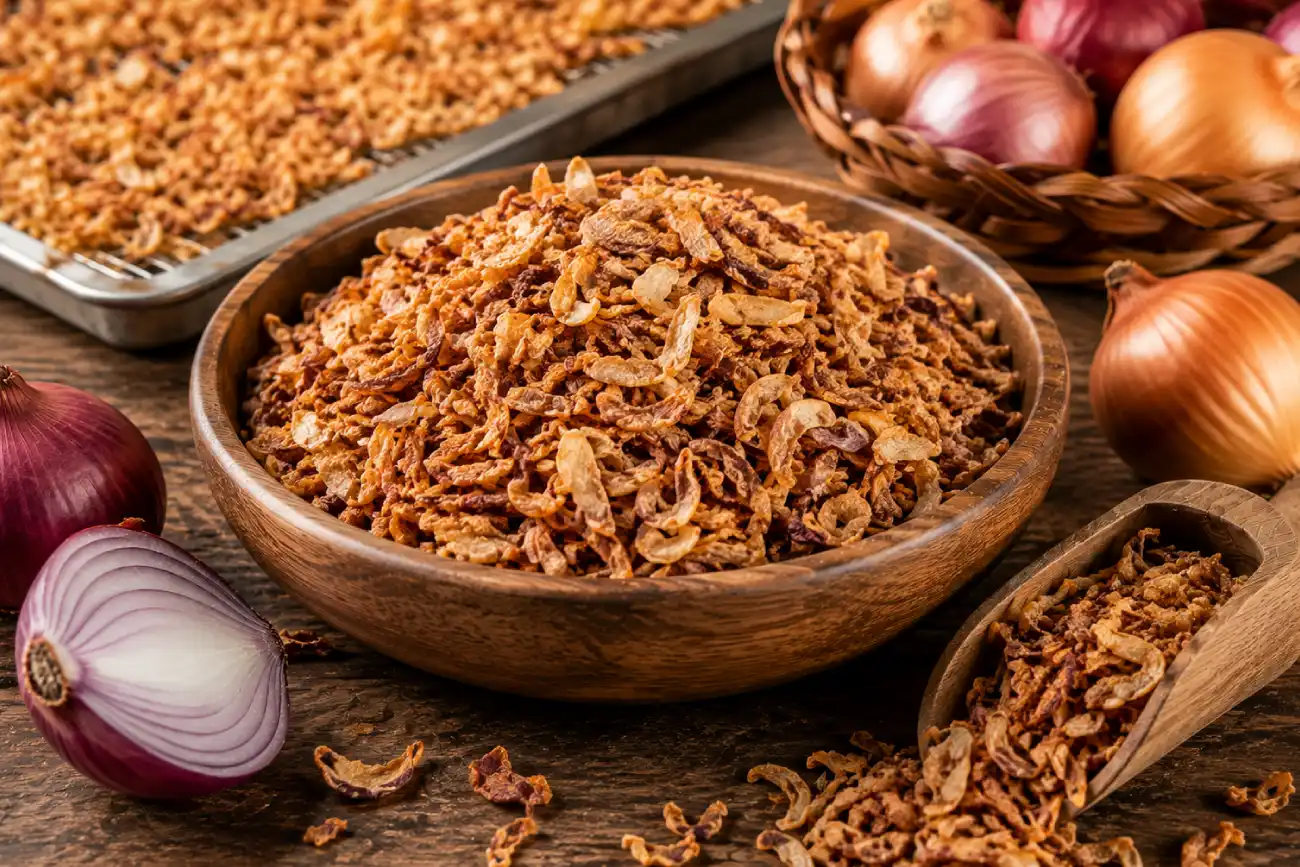
Understanding the shelf life of dehydrated fried onions is essential for food manufacturers, restaurants, exporters and distributors who rely on consistent ingredient quality. Properly manufactured and stored dehydrated fried onions maintain their crisp texture, rich flavor and attractive appearance for extended periods, helping businesses reduce waste and improve inventory management.
If you’re sourcing products from trusted dehydrated fried onion suppliers in India, knowing what affects shelf life can help you choose the right supplier and protect product quality throughout storage and distribution.
This guide explains how long dehydrated fried onions typically last, the factors that influence shelf life, recommended storage practices and how to maximize freshness in commercial food operations.
What Is the Shelf Life of Dehydrated Fried Onions?
The shelf life of dehydrated fried onions depends on several factors, including manufacturing quality, moisture content, packaging, storage conditions and handling practices.
When processed under hygienic conditions and packed in moisture-resistant food-grade packaging, dehydrated fried onions generally remain in good condition for 9 to 18 months, depending on the formulation, oil used, packaging type and the manufacturer’s validated shelf-life studies.
Always follow the shelf-life declaration and storage recommendations provided by the manufacturer rather than relying on a fixed duration.
Why Do Dehydrated Fried Onions Last Longer?
Unlike freshly fried onions, dehydrated fried onions contain significantly less moisture.
Lower moisture levels help:
- Reduce microbial growth
- Maintain crisp texture
- Preserve natural flavor
- Improve storage stability
- Reduce spoilage during transportation
Combined with proper packaging, these characteristics make dehydrated fried onions suitable for bulk storage and export.
Factors That Affect the Shelf Life of Dehydrated Fried Onions
Several factors influence how long the product maintains its quality.
1. Moisture Content
Moisture is one of the biggest factors affecting shelf life.
Low moisture helps:
- Prevent microbial growth
- Reduce clumping
- Maintain crispness
- Extend product stability
Reliable dehydrated fried onion manufacturers carefully control moisture during production.
2. Quality of Frying Oil
The quality and stability of the edible oil used during frying influence product freshness.
Manufacturers using fresh, high-quality frying oil and controlled frying temperatures help reduce the risk of early quality deterioration.
3. Packaging Quality
Proper packaging protects the product against:
- Moisture
- Oxygen
- Light
- Dust
- Physical damage
Food-grade laminated pouches and multi-layer moisture-barrier packaging are commonly used for commercial and export shipments.
4. Storage Temperature
High temperatures accelerate quality deterioration.
For best results:
- Store in cool conditions.
- Avoid direct sunlight.
- Keep away from heat sources.
Stable storage temperatures help preserve flavor, aroma and texture.
5. Exposure to Air
Once packaging is opened, prolonged exposure to air may gradually reduce crispness and aroma.
Always reseal opened packages immediately using airtight containers or sealed bags.
Signs That Dehydrated Fried Onions Are No Longer at Their Best
Even within the labeled shelf life, improper storage can affect quality.
Watch for:
- Loss of crispness
- Rancid or stale odor
- Moisture absorption
- Discoloration
- Visible mold
- Damaged packaging
Products showing these signs should be evaluated according to your quality control procedures before use.
Best Storage Practices
Proper storage plays an important role in maximizing product quality.
Follow these recommendations:
Store in a Cool and Dry Place
Choose clean, well-ventilated storage areas away from humidity.
Protect from Moisture
Moisture is one of the main causes of quality loss.
Always keep packages tightly sealed.
Avoid Direct Sunlight
Sunlight may affect both the packaging and product quality over time.
Use Airtight Containers
After opening, transfer the product into clean, airtight food-grade containers if it will not be used immediately.
Follow FIFO
Implement First In, First Out (FIFO) inventory management to ensure older stock is used before newer stock.
Maintain Clean Storage Areas
Keep storage areas free from pests, contaminants and excessive dust.
Why Shelf Life Matters for Food Manufacturers
A longer shelf life offers several operational advantages.
Better Inventory Management
Businesses can purchase larger quantities while maintaining product quality.
Reduced Food Waste
Long-lasting ingredients reduce spoilage and unnecessary disposal.
Improved Production Planning
Manufacturers can maintain uninterrupted production schedules.
Lower Procurement Costs
Bulk purchasing often reduces transportation and purchasing expenses.
Reliable Export Performance
Long shelf life supports international shipping and extended transit times.
Quality Standards That Support Longer Shelf Life
Professional dehydrated fried onion suppliers maintain strict quality controls throughout manufacturing.
Key quality parameters include:
- Controlled moisture content
- Uniform frying
- Consistent color
- High-quality edible oil
- Hygienic processing
- Food-grade packaging
- Microbiological testing
- Batch traceability
These measures help maintain product quality from production to delivery.
Choosing the Right Supplier
Not all suppliers provide the same quality standards.
Choose suppliers that offer:
- HACCP or ISO 22000 certified facilities
- Complete product specifications
- Laboratory quality testing
- Moisture-controlled manufacturing
- Export-quality packaging
- Reliable production capacity
- Batch consistency
- Technical support
Experienced dehydrated fried onion suppliers in India provide detailed documentation and consistent quality for commercial buyers.
Why India Is a Preferred Source for Dehydrated Fried Onions
India is one of the leading producers of dehydrated onion products because of its strong agricultural base and advanced processing infrastructure.
Working with a trusted dehydrated fried onion supplier in India provides several advantages:
- Reliable raw material availability
- Competitive pricing
- Modern manufacturing facilities
- Export-ready packaging
- Large production capacity
- Consistent product quality
Many international buyers also partner with a bulk dehydrated fried onion exporter for dependable global supply and customized packaging solutions.
Food Safety and Storage Standards
Commercial buyers should source products from manufacturers following internationally recognized food safety systems such as HACCP, ISO 22000 and Good Manufacturing Practices (GMP).
For additional guidance on safe food storage and food manufacturing practices, visit the U.S. Food & Drug Administration (FDA). The FDA provides comprehensive resources on food safety, preventive controls and ingredient handling.
Conclusion
The shelf life of dehydrated fried onions depends on manufacturing quality, moisture control, packaging and proper storage practices. When sourced from reliable manufacturers and stored correctly, dehydrated fried onions retain their flavor, crispness and quality for extended periods, making them an excellent choice for food manufacturers, restaurants, exporters and distributors.
Partnering with experienced dehydrated fried onion manufacturers ensures consistent quality, dependable supply and products designed to perform well throughout their intended shelf life.
At Optimum Foods, we manufacture premium dehydrated fried onions using carefully selected onions, advanced processing technology and strict quality control to deliver reliable quality for domestic and international food businesses.
Frequently Asked Questions
- What is the typical shelf life of dehydrated fried onions?
The shelf life of dehydrated fried onions typically ranges from 9 to 18 months, depending on manufacturing quality, moisture content, packaging, storage conditions and the manufacturer’s validated shelf-life studies. Always follow the supplier’s labeled expiry date and storage recommendations.
- How should dehydrated fried onions be stored?
Store dehydrated fried onions in a cool, dry place away from moisture, heat and direct sunlight. Keep unopened packages sealed and transfer opened products to airtight food-grade containers to help maintain crispness, aroma and overall product quality.
- What factors affect the shelf life of dehydrated fried onions?
Shelf life is influenced by moisture content, frying oil quality, packaging, storage temperature, exposure to oxygen and handling practices. Choosing products from reliable Dehydrated Fried Onion manufacturers and following recommended storage guidelines helps preserve quality for longer.
- Why choose Dehydrated Fried Onion suppliers in India?
Professional dehydrated fried onion suppliers in India offer modern manufacturing facilities, competitive pricing, export-quality packaging, consistent production standards and food safety certifications. These strengths make India a trusted sourcing destination for global food manufacturers and importers.
- What should I check before buying from a dehydrated fried onion manufacturer in India?
Review moisture content, packaging quality, shelf-life information, food safety certifications, microbiological testing, product specifications, batch consistency and production capacity. Reliable manufacturers provide transparent documentation to support commercial purchasing decisions.
- Why work with a Bulk Dehydrated Fried Onion Exporter?
A Bulk Dehydrated Fried Onion Exporter offers large-scale production, customized packaging, export documentation, consistent quality and dependable international logistics. These capabilities help food manufacturers and distributors maintain uninterrupted ingredient supplies across global markets.